
Brake Repair in
San Marcos, TX
Keeping Central Texas drivers safe since 1978. We inspect first, explain everything clearly, and only recommend what your vehicle actually needs.

Every Brake Repair Backed by Our 24-Month / 24,000-Mile Warranty
We stand behind every brake job we perform. If something isn't right, bring it back — we'll make it right. No runaround, no excuses.
Signs you need brake service
Our approach
We Inspect First — Every Time
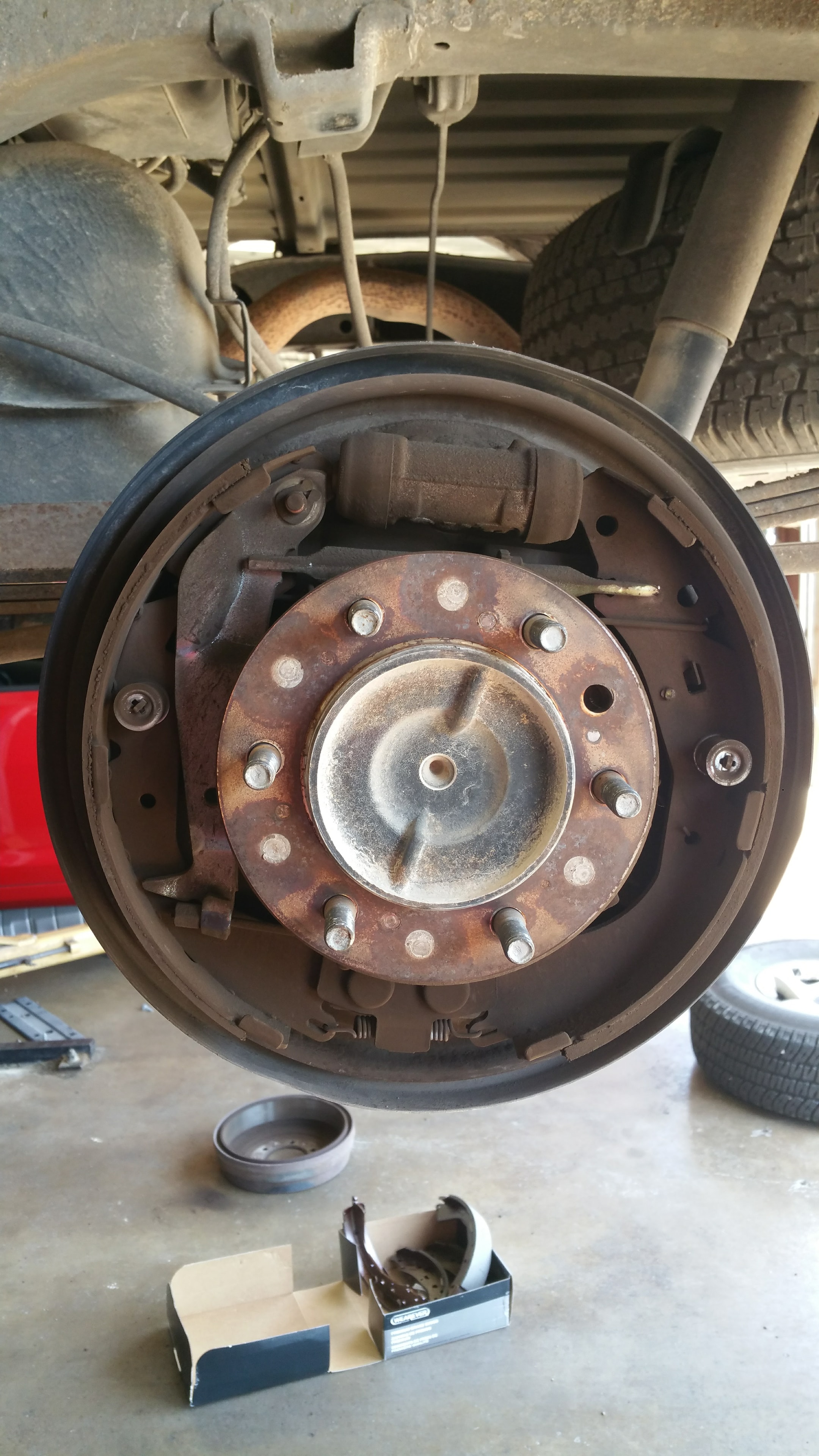
Every brake system wears differently. That's why we never sell pre-packaged brake jobs. A certified technician inspects the system front to back and gives you a clear, itemized report — so you know exactly what needs attention now and what can wait.
Most sources recommend having your brakes visually inspected every 10,000 to 12,000 miles, or roughly once a year, even if you haven't noticed any symptoms. If you drive frequently in stop-and-go traffic, tow, or drive a heavier vehicle, more frequent checks are a good idea.
Schedule an Inspection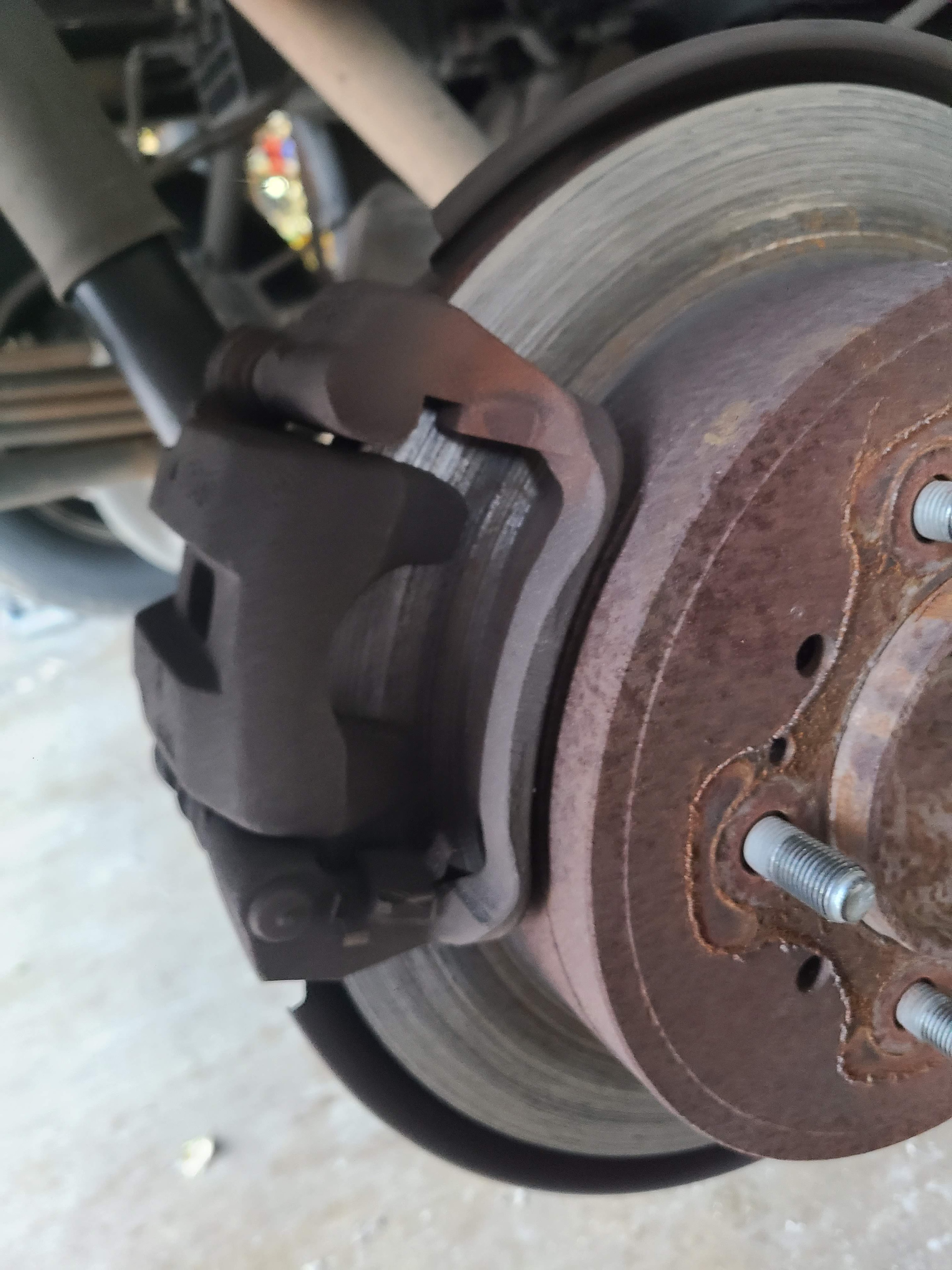
What a complete inspection covers:
- Brake pads & shoesthickness, wear pattern
- Rotors & drumsrunout, scoring, minimum thickness
- Calipersslides, piston operation, leaks
- Brake fluidcondition and moisture level
- Brake lines & hosesrust, abrasion, seepage
- Master cylinder & boosterassist and pedal feel
- ABS systemwarning lights, basic diagnostics
Riley Auto Care & Transmissions — brake repair serving San Marcos, Kyle, Buda, and New Braunfels.
Book ServiceWhat we do
Our Brake Services
All makes and models — domestic trucks, import sedans, SUVs, and everything in between.
Brake Pad Replacement
All axles — OE-quality friction material for reliable stopping power.
Rotor Replacement
New OE-quality rotors installed with every pad job for peak performance.
Brake Fluid Flush & Bleed
Restores pedal feel and removes moisture that causes internal corrosion.
Caliper Service & Replacement
Cleaning, lubrication, slide pin service, and replacement when sticking or leaking.
ABS Repair & Diagnostics
Scan, test, and replace ABS components per manufacturer specs.
Drum Brake Service
Shoes, hardware, wheel cylinders, and drum inspection or replacement.
Brake Line & Hose Inspection
Replacement for leaks, corrosion, or bulging hoses.
Emergency Brake Adjustment
Proper tension and function check on your parking brake system.
Brake repair in Hays County — Riley Auto Care & Transmissions, 1334 TX-123, San Marcos, TX.
Book ServiceUnderstanding your brake system
What Happens During a Brake Inspection and Why It Matters
Why Brake Maintenance Gets Overlooked
Brake-related maintenance is one of the most commonly neglected services on a vehicle, even among drivers who are otherwise diligent about oil changes. Brake fluid maintenance is the single most frequently missed service item — a higher miss rate than battery checks, transmission fluid, tire maintenance, or coolant service. Brake fluid doesn't have a dashboard light reminding you to change it the way an oil-life monitor does, so it's easy to forget about even though it plays a critical role in how your brakes perform.
The consequences of ignoring brake maintenance aren't just theoretical. AAA's analysis of roadside assistance data found that brake system failures were responsible for more than 235,000 vehicle tow calls in a single year — a number that reflects how many drivers end up stranded, or worse, in a dangerous situation, because a problem that could have been caught early was allowed to progress. Almost all of these situations are preventable with routine inspection.
Brake Pads and Shoes: Thickness and Wear Pattern
Brake pads and brake shoes are the friction material that presses against the rotor or drum to slow the vehicle. As they do their job, they wear down gradually. There's no single mileage number that applies to every vehicle — pad life depends heavily on driving habits and conditions. Brake pads typically last anywhere from 30,000 to 80,000 miles, with lifespan influenced by driving style, pad material, the condition of other braking components, and even local weather. Stop-and-go city driving, frequent hard braking, hilly terrain, and towing all shorten pad life considerably compared to steady highway driving.
When we inspect pads and shoes, we're looking at two separate things: thickness — how much friction material remains before the pad reaches its wear limit — and wear pattern — whether the pad or shoe is wearing evenly across its surface, or unevenly on one side or corner. Uneven wear is a signal that something else is going on: a sticking caliper slide, a seized parking brake cable, a warped rotor, or a suspension alignment issue can all cause a pad to wear unevenly, and replacing the pad without addressing the underlying cause just means you'll be back in the same spot a few months later.
Common signs your pads may need attention:
- A high-pitched squeal or chirp when braking (often a built-in wear indicator, not damage)
- Grinding or metal-on-metal sound — the friction material is gone and should be addressed immediately
- A vibration or pulsation felt in the brake pedal
- The vehicle pulling to one side when braking
- Longer stopping distances than normal
- A dashboard brake warning light
Rotors and Drums: Runout, Scoring, and Minimum Thickness
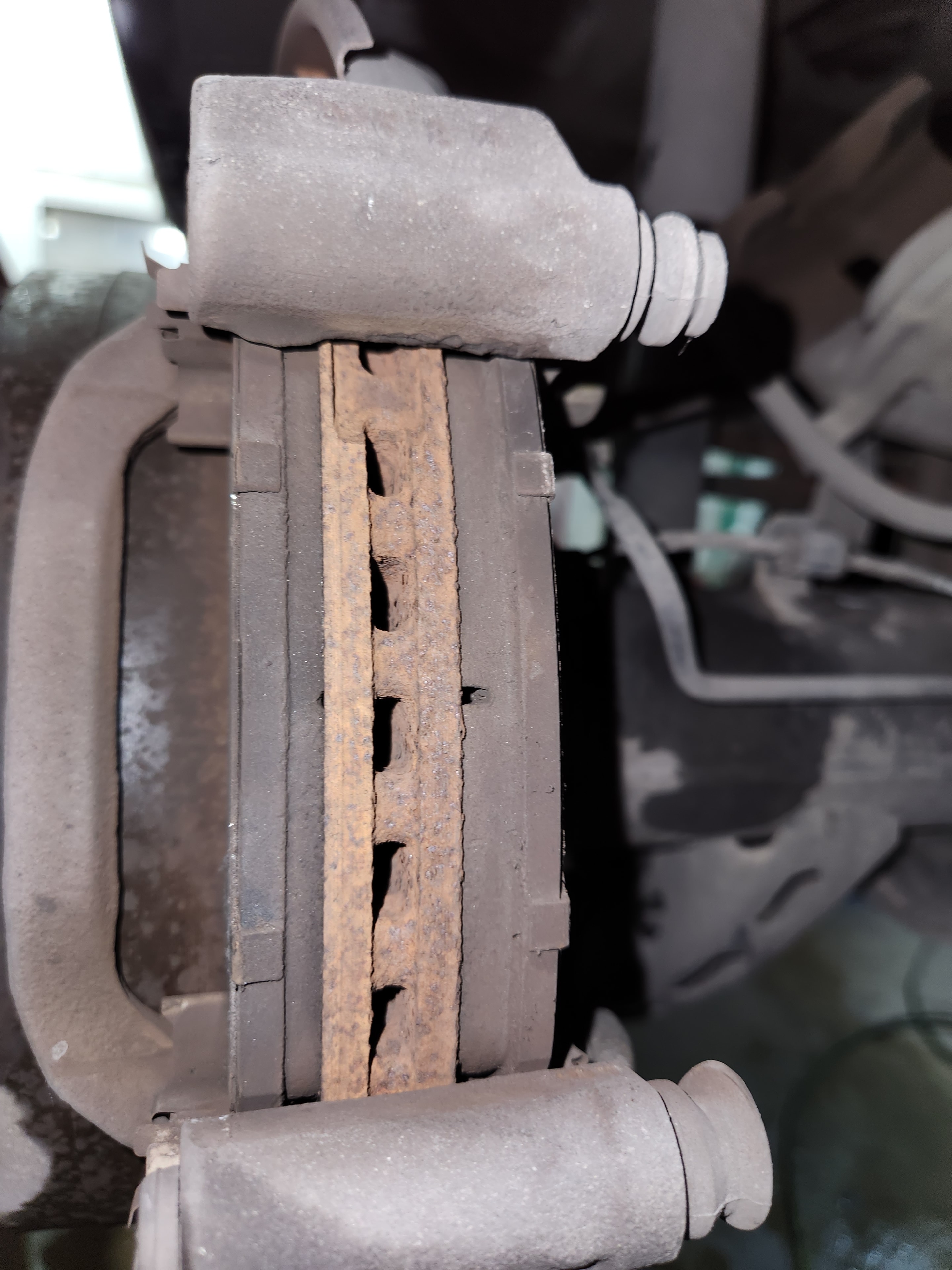
Rotors and drums are the surfaces the pads or shoes clamp against. Because they're metal-on-metal contact points that generate and dissipate significant heat, they're inspected closely any time pads or shoes are replaced, and any time a customer reports a vibration, pulsation, or noise.
A technician checks runout — how true the rotor spins on its axis (excessive runout causes a pulsating pedal or steering shudder under braking); scoring — grooves cut into the surface by pads that were run too long after the friction material wore through; and minimum thickness — every rotor and drum has a discard specification representing the thinnest it can safely get before it no longer has the mass needed to absorb and dissipate heat properly.
Our shop replaces rotors and drums rather than resurfacing them. While resurfacing is a service some shops offer, it removes material and brings the rotor closer to its minimum thickness each time it's done, which shortens its remaining service life. We find that for most vehicles, replacement provides a more reliable, longer-lasting result, and it ensures every rotor or drum leaving our shop starts fresh at full thickness rather than partway toward its discard limit.
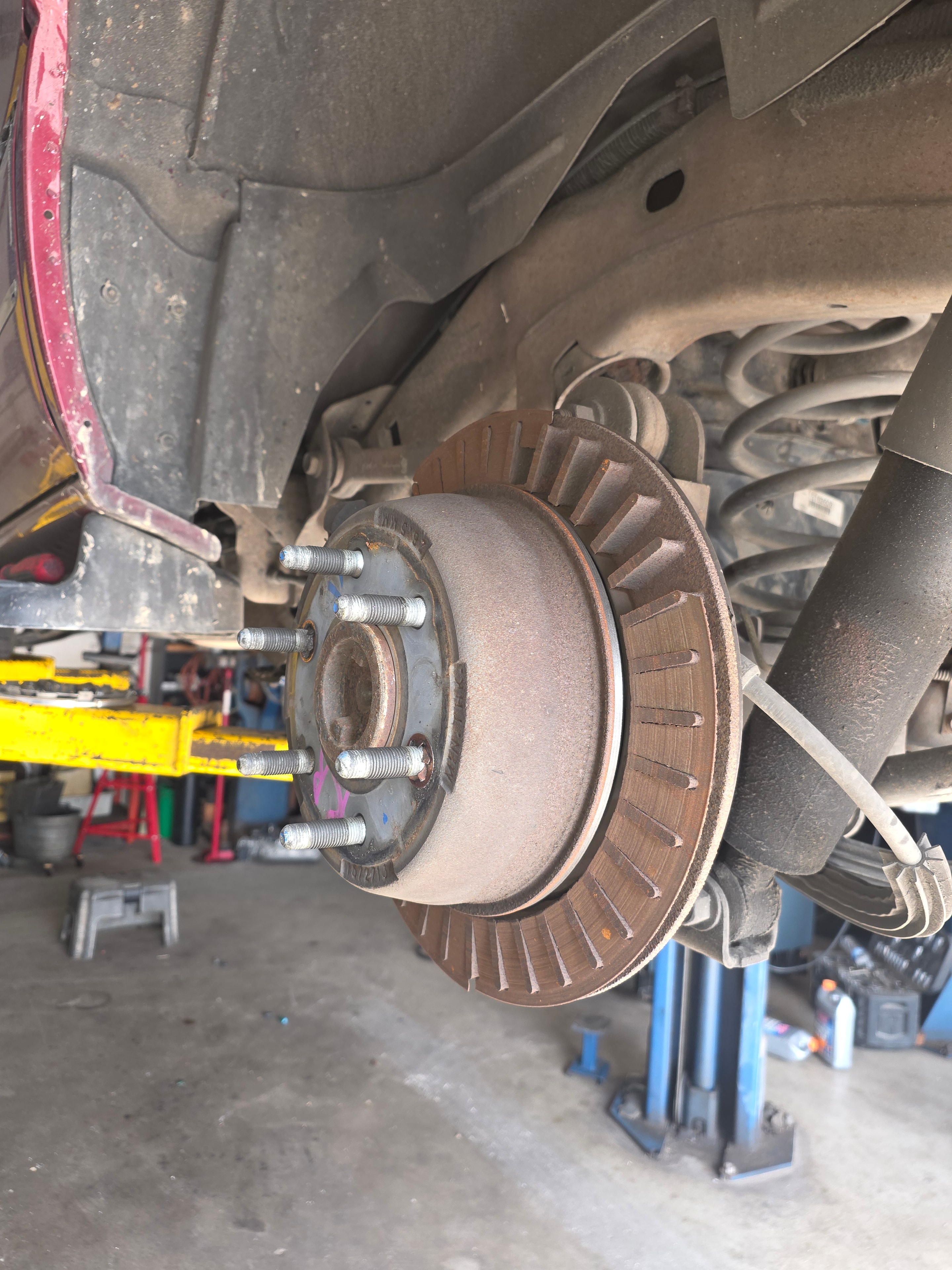
Calipers: Slides, Piston Operation, and Leaks
Calipers are the mechanical clamp that squeezes the brake pads against the rotor. They're often the most overlooked part of a brake job, but a caliper problem can cause premature pad wear, pulling, dragging, or uneven braking even when the pads and rotors themselves are in good shape.
During inspection, technicians check slide pins — on floating calipers, these allow the caliper body to move slightly as the pads wear; if a slide pin is corroded or seized, the caliper can't move properly, which often causes one pad to wear much faster than the other. They also check piston operation — a piston that's sticking or moving sluggishly can cause the brake to drag even when your foot is off the pedal, generating excess heat and wearing the pad and rotor prematurely — and leaks — brake fluid seeping from around the piston seal or at the caliper's brake line connection is a safety concern that indicates a worn internal seal.
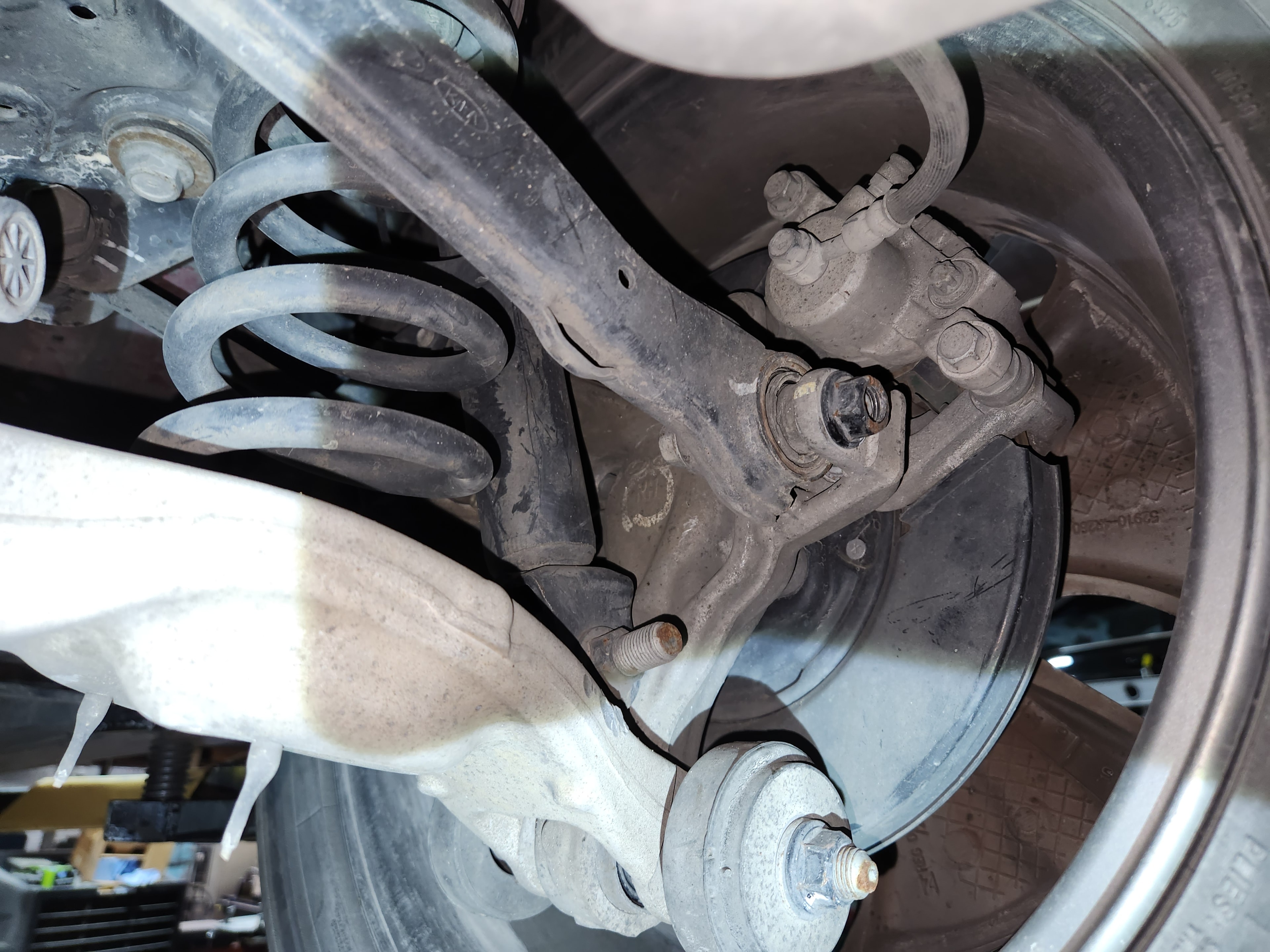
Brake services
Brakes
Brake Inspection
Our complete brake services include inspecting, cleaning, lubricating, and adjusting all system components, plus checking pad and rotor condition, caliper operation, and brake fluid quality to ensure safe, reliable stopping power.
Brake System Diagnostics
Brake system diagnostics measure rotor thickness, pad wear, and caliper function, alongside brake fluid condition and moisture level, to identify exactly what's causing noise, pulsation, or reduced stopping performance.
Front Brake Replacement
Our front brake replacement installs new brake pads and rotors to restore full, even stopping power. Calipers and hardware are inspected at the same time to make sure every new component performs safely and reliably.
Brake System Flushing
Brake system flushing replaces old, moisture-contaminated fluid with fresh, DOT-approved fluid. This helps maintain a firm pedal feel, protects internal components from corrosion, and preserves the fluid's proper boiling point.
Brake Hardware Replacement
Brake hardware replacement swaps out worn caliper pins, clips, and return springs alongside pad service, helping prevent uneven wear, noise, and dragging caused by hardware that no longer holds components securely in place.
ABS Module Replacement
ABS module replacement swaps a faulty anti-lock brake controller to restore proper hydraulic control during hard braking, helping maintain steering control on slick surfaces and resolving an illuminated ABS warning light.
Brake Vibration Repair
Our brake vibration repair corrects steering wheel and pedal pulsation by measuring rotor runout and thickness, identifying warped or worn components, and replacing them to restore a smooth, vibration-free stop.
Brake Fluid: Condition and Moisture Level
Brake fluid is the medium that transmits the force from your foot on the pedal to the caliper or wheel cylinder at each wheel. Unlike most other fluids in your car, brake fluid is hygroscopic, meaning it naturally absorbs moisture from the air over time — even in a fully sealed system.
Standard glycol-based brake fluids are required to have a fresh, dry boiling point of at least 401°F for DOT 3 fluid and 446°F for DOT 4 fluid. As the fluid absorbs moisture, that boiling point drops. Industry standards consider fluid in need of replacement once its wet boiling point falls to roughly 284°F for DOT 3 or 311°F for DOT 4 — the minimum considered safe for reliable brake operation. If the boiling point drops too low, fluid can vaporize under the heat of hard or repeated braking, creating compressible pockets of vapor in the lines. This is brake fade, and in severe cases it can lead to a spongy pedal or a significant loss of braking power at the worst possible time.
Moisture-laden fluid also contributes to internal corrosion of metal brake components — calipers, wheel cylinders, and the metal brake lines themselves — from the inside out. During inspection, we check the fluid's color and clarity and test its moisture content directly. If moisture levels are elevated, a fluid flush is recommended before it becomes a bigger issue.
Brake Lines and Hoses: Rust, Abrasion, and Seepage
Brake lines are the rigid metal tubing that carries fluid from the master cylinder toward each wheel, while flexible rubber hoses connect those lines to components that move, like the calipers at each wheel. Both are inspected for rust — particularly relevant here in Texas, where humidity and general age can cause metal lines to corrode from the outside in — abrasion from lines and hoses that rub against suspension components or the frame over time, and seepage — even a small amount of fluid weeping from a line or hose fitting indicates a developing leak that should be repaired before it worsens.
Master Cylinder and Booster: Assist and Pedal Feel
The master cylinder converts the mechanical force of your foot pressing the pedal into hydraulic pressure that's distributed to each wheel. The brake booster multiplies that force so you don't have to push nearly as hard to stop the car.
A pedal that feels soft or sinks slowly to the floor under steady pressure often points to an internal seal leak in the master cylinder. A pedal that feels unusually hard, or requires much more force than normal to stop the car, often points to a booster that has lost vacuum assist or has failed internally. Because these symptoms can overlap with other issues, a proper diagnosis typically involves a combination of pedal-feel testing, a visual check of fluid levels and leakage points, and — when needed — pressure testing to isolate exactly which component is at fault.
ABS System: Warning Lights and Basic Diagnostics
The Anti-lock Braking System prevents wheel lockup during hard braking, helping you maintain steering control on slick or loose surfaces. It relies on wheel speed sensors at each wheel, a hydraulic control unit, and a dedicated ABS control module that constantly compares wheel speed data to detect when a wheel is about to lose traction.
When the ABS light illuminates on your dashboard, it means the system has detected a fault and has disabled ABS functionality as a precaution — your regular brakes will still work, but you'll lose the anti-lock and, on many vehicles, the traction and stability control benefits as well until the issue is resolved. Common causes include a wheel speed sensor that's failed, damaged, or covered in debris; damaged or corroded wiring at a wheel speed sensor connector; or a faulty ABS hydraulic control unit or module.
Basic diagnostics start with pulling stored trouble codes with a scan tool, which will typically point to a specific wheel or circuit. From there, a technician inspects the sensor and wiring for visible damage or corrosion, checks the air gap and connector integrity, and — if needed — road-tests the vehicle while monitoring live sensor data to confirm all four wheel speed signals are accurate and consistent. It's important not to ignore an illuminated ABS light: while it doesn't mean your brakes have failed, it does mean you've lost a safety system designed specifically to help in an emergency stop or on a slippery road.
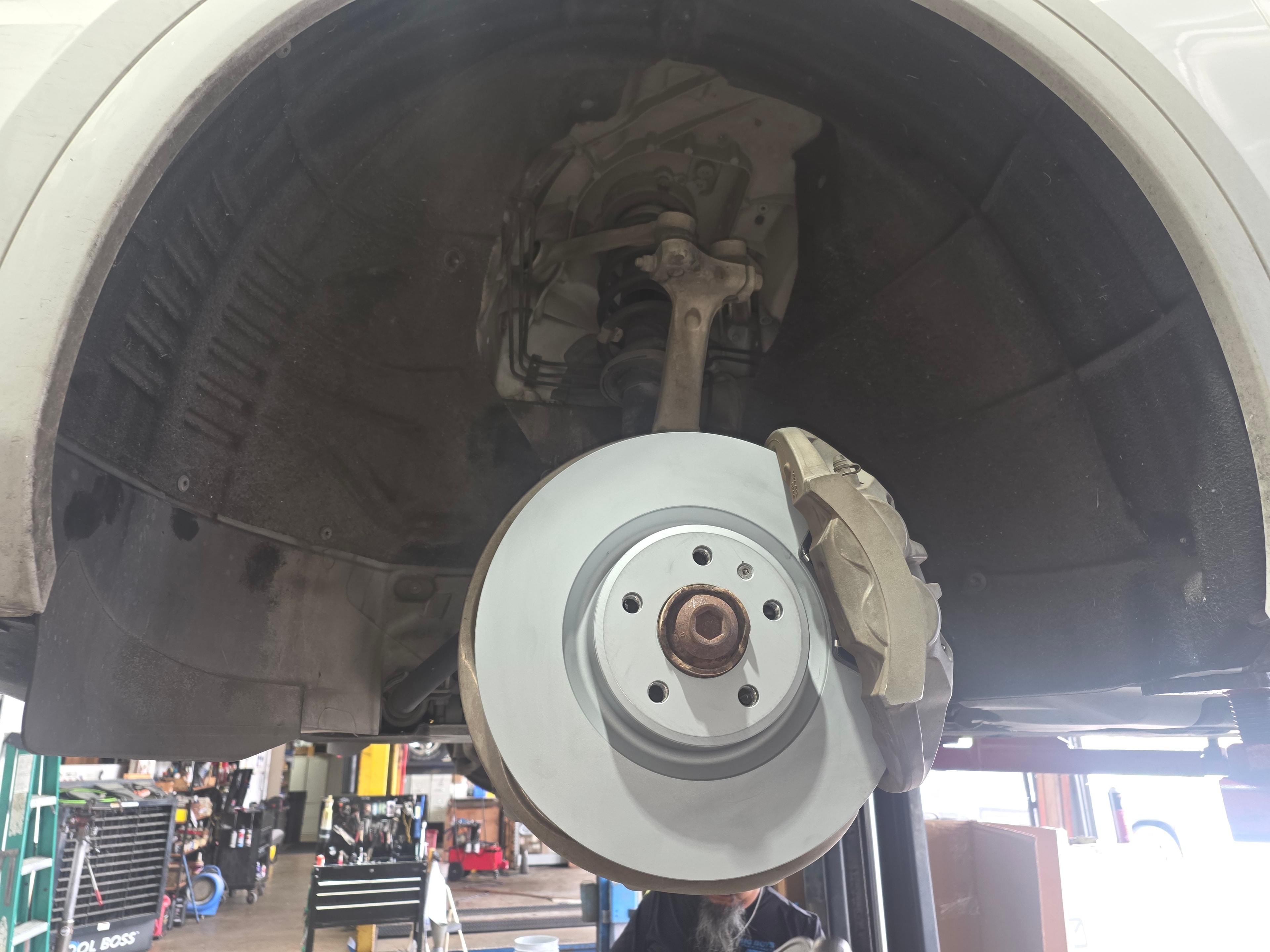
Serving San Marcos, Kyle, Buda, New Braunfels & Wimberley — Riley Auto Care & Transmissions on TX-123.
Book Service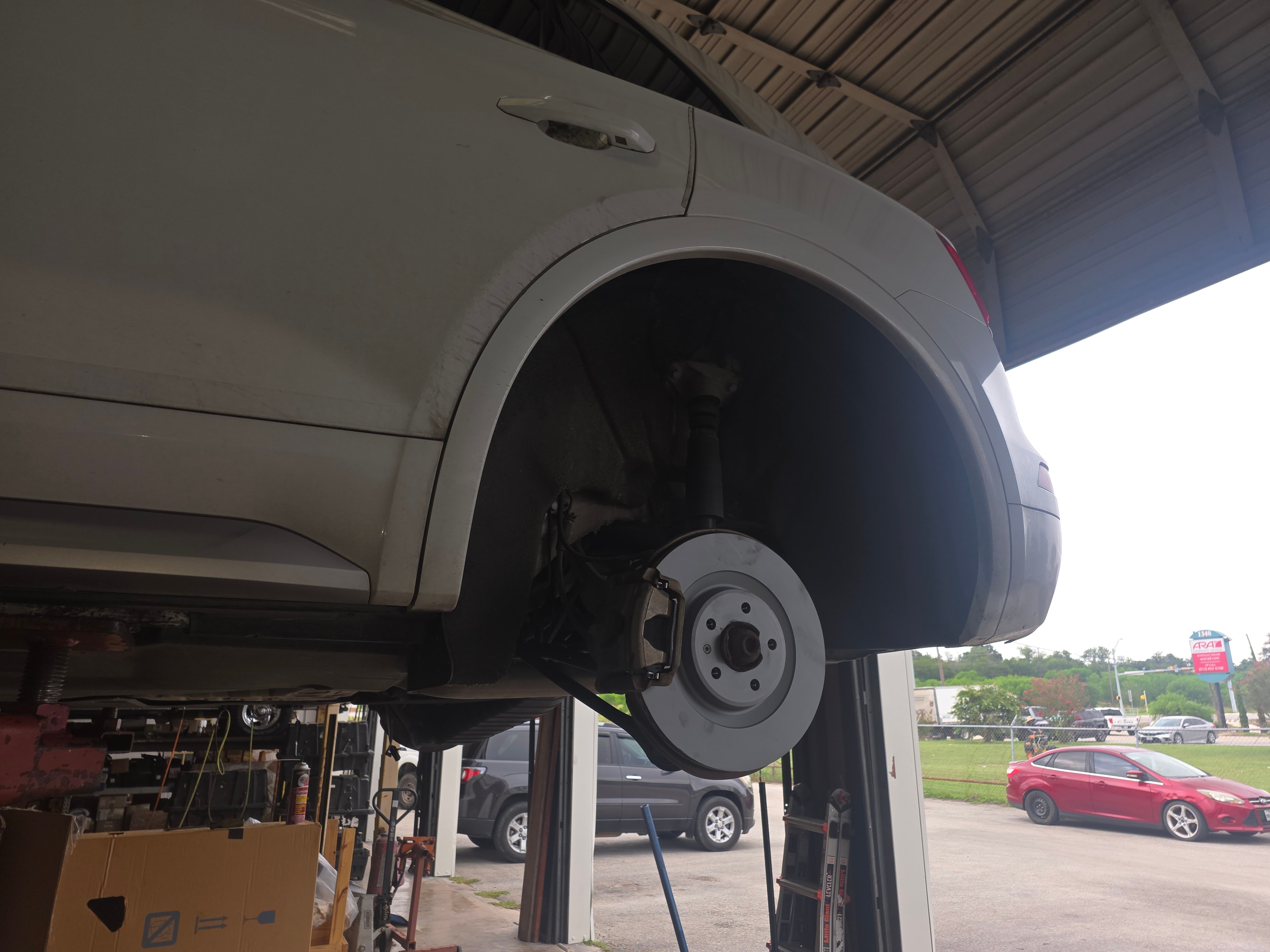
Vehicles That See Brake Wear a Little Faster
While every vehicle's brake life depends mostly on how and where it's driven, certain vehicle types tend to go through brakes more quickly simply due to their weight or use case — larger SUVs and trucks, especially those used for towing, and vehicles driven primarily in stop-and-go traffic. If you drive a heavier vehicle or do a lot of city driving or towing, it's worth having your brakes checked a little more often than the general recommendation.
How Often Should You Have Your Brakes Inspected?
As a general guideline, most sources recommend having your brakes visually inspected every 10,000 to 12,000 miles, or roughly once a year, even if you haven't noticed any symptoms. If you drive frequently in stop-and-go traffic, tow, or drive a heavier vehicle, more frequent checks are a good idea. And regardless of mileage, any of the warning signs described above — noise, pulsation, pulling, a soft or hard pedal, or a dashboard warning light — is a good reason to have your brakes looked at sooner rather than later.
Brakes aren't a system where it makes sense to wait until something fails. Because so many of the components work together, a small issue caught early is almost always a simpler and less expensive fix than the same issue after it's been allowed to progress. If it's been a while since your brakes were inspected, or if you've noticed any changes in how your vehicle stops, feel free to bring it in and we'll walk you through exactly what we find.
Serving San Marcos, Kyle, Buda, New Braunfels & Hays County
Easy to reach from I-35 and TX-123. Family owned and operated for over 45 years.
Sources & References
- 1.AAA Newsroom – "Understanding Vehicle Maintenance Needs Challenging Motorists" (Oct. 2, 2014)
- 2.AAA Newsroom – "Roadside Breakdowns Preventable with Proper Maintenance, Finds AAA" (Oct. 8, 2015)
- 3.Carfax – "How Much Does Brake Pad Replacement Cost?"
- 4.Mitchell1 ShopConnection – "Rotor Specifications"
- 5.Shop Owner Magazine – "Brake Rotor Specs: Measurement and Service Techniques"
- 6.AA1Car / Brake & Front End – "Diagnosing Antilock Brake System Wheel Speed Sensors"
- 7.Brake & Front End – "Diagnosing Wheel Speed Sensors"
Other auto repair services
Brake Repair & Service Near Me — San Marcos, TX
Conveniently located in the heart of San Marcos, TX, Riley Auto Care & Transmissions is proud to be the trusted destination for expert auto repair in Central Texas.


Ready to Schedule?
Call us or book online — we'll take care of the rest.