Transmission Repair
We Handle EVERYTHING
Riley Auto Care & Transmissions
San Marcos, Texas
Central Texas's transmission specialists since 1978. We evaluate first, explain everything clearly, and only recommend what your vehicle actually needs.

Every Transmission Repair Backed by Our 24-Month / 24,000-Mile Warranty
We stand behind every transmission job we perform. If something isn't right, bring it back — we'll make it right. No runaround, no excuses.
Signs you need transmission service

Our approach
We Evaluate First — Every Time
Transmission problems are rarely straightforward. That's why we never guess. A certified technician rides with you, scans every control module, and inspects the system before we ever recommend a repair — so you know exactly what's wrong and why.
Most transmission failures are preventable with routine fluid service. We recommend having your transmission fluid inspected every 30,000–50,000 miles — more often if you tow, drive in stop-and-go traffic, or operate in extreme heat.
Schedule a DiagnosticOur 4-step transmission process:
- 1Test drive1–2 miles with a certified technician
- 2Full module scanall available network control modules
- 3Under-hood inspectionfluids, leaks, critical systems
- 4Clear consultationfindings explained, options presented
What a complete inspection covers:
- Fluid condition & levelcolor, smell, contamination
- Filter & pandebris, metal particles
- Solenoids & valve bodyshift quality, pressure
- Torque convertershudder, lockup function
- External seals & gasketsleaks, seepage
- Mounts & linkagevibration, engagement feel
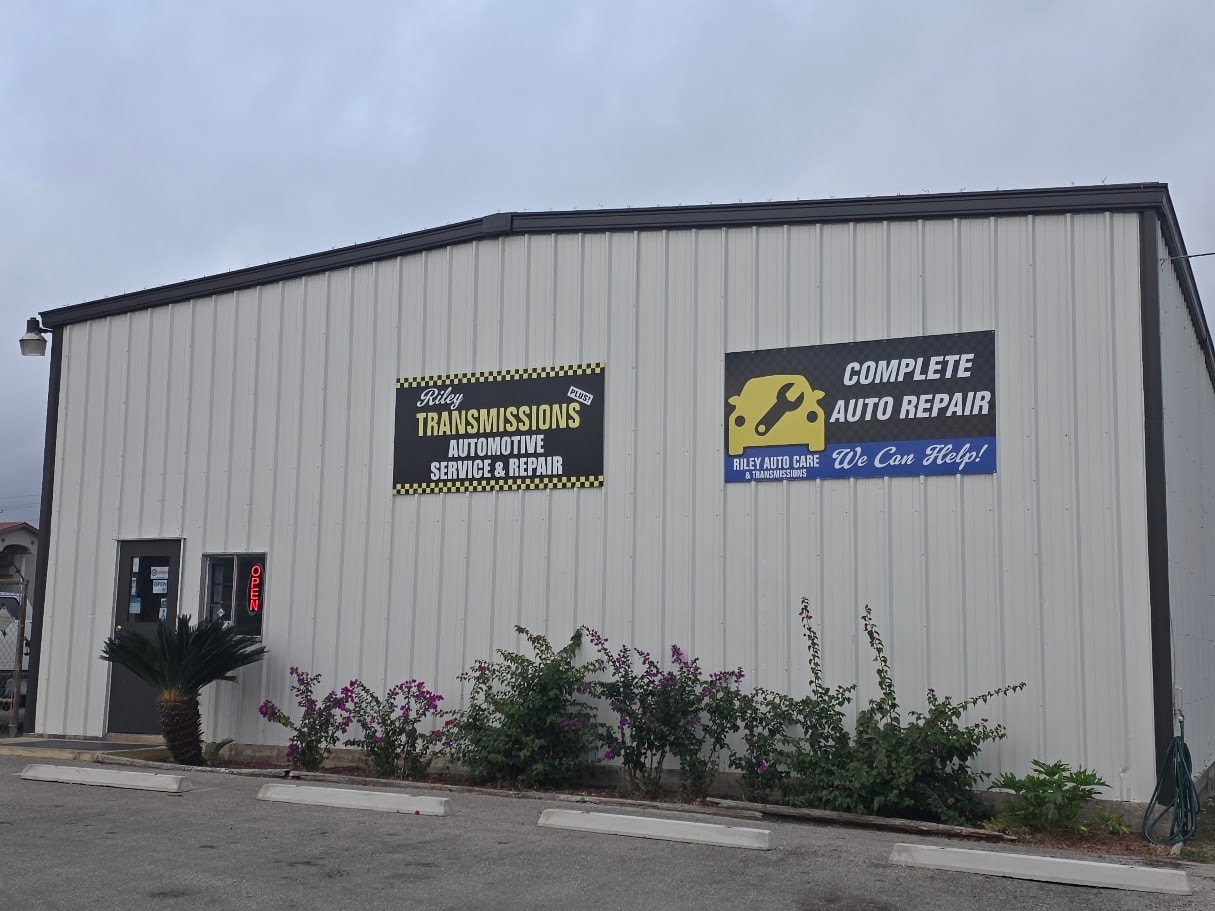
Riley Auto Care & Transmissions — transmission repair serving San Marcos, Kyle, Buda, and New Braunfels.
Book ServiceWhat we do
Our Transmission Services
All makes and models — domestic trucks, import sedans, SUVs, CVTs, and everything in between.
Transmission repair in Hays County — Riley Auto Care & Transmissions, 1334 TX-123, San Marcos, TX.
Book ServiceUnderstanding your transmission
What Happens During a Transmission Inspection and Why It Matters
Why Transmission Maintenance Gets Overlooked
Transmission fluid is one of the most commonly skipped maintenance items on any vehicle. Unlike engine oil, there's no dashboard light counting down to your next fluid change — and many manufacturer "lifetime fluid" claims are built around ideal, light-duty conditions that don't reflect real-world driving in Texas heat, stop-and-go traffic, or towing use. The result is that most transmissions are running on degraded fluid long before the owner realizes it.
Degraded fluid loses its ability to lubricate clutch packs, cool the valve body, and maintain proper hydraulic pressure. Metal particles accumulate. Varnish builds up on solenoids. What starts as a minor shift hesitation can progress to a slipping band, a failed solenoid, or a damaged torque converter — all of which are far more expensive to address than a timely fluid service would have been.
Transmission Fluid: Condition, Color, and Contamination
Healthy automatic transmission fluid is typically a bright red or pink color with a slightly sweet smell. As it ages and degrades, it darkens — first to a brownish red, then to a dark brown or nearly black color — and takes on a burnt smell. Dark, burnt fluid is a clear sign that the fluid has been heat-cycled beyond its useful life and is no longer providing adequate lubrication or cooling.
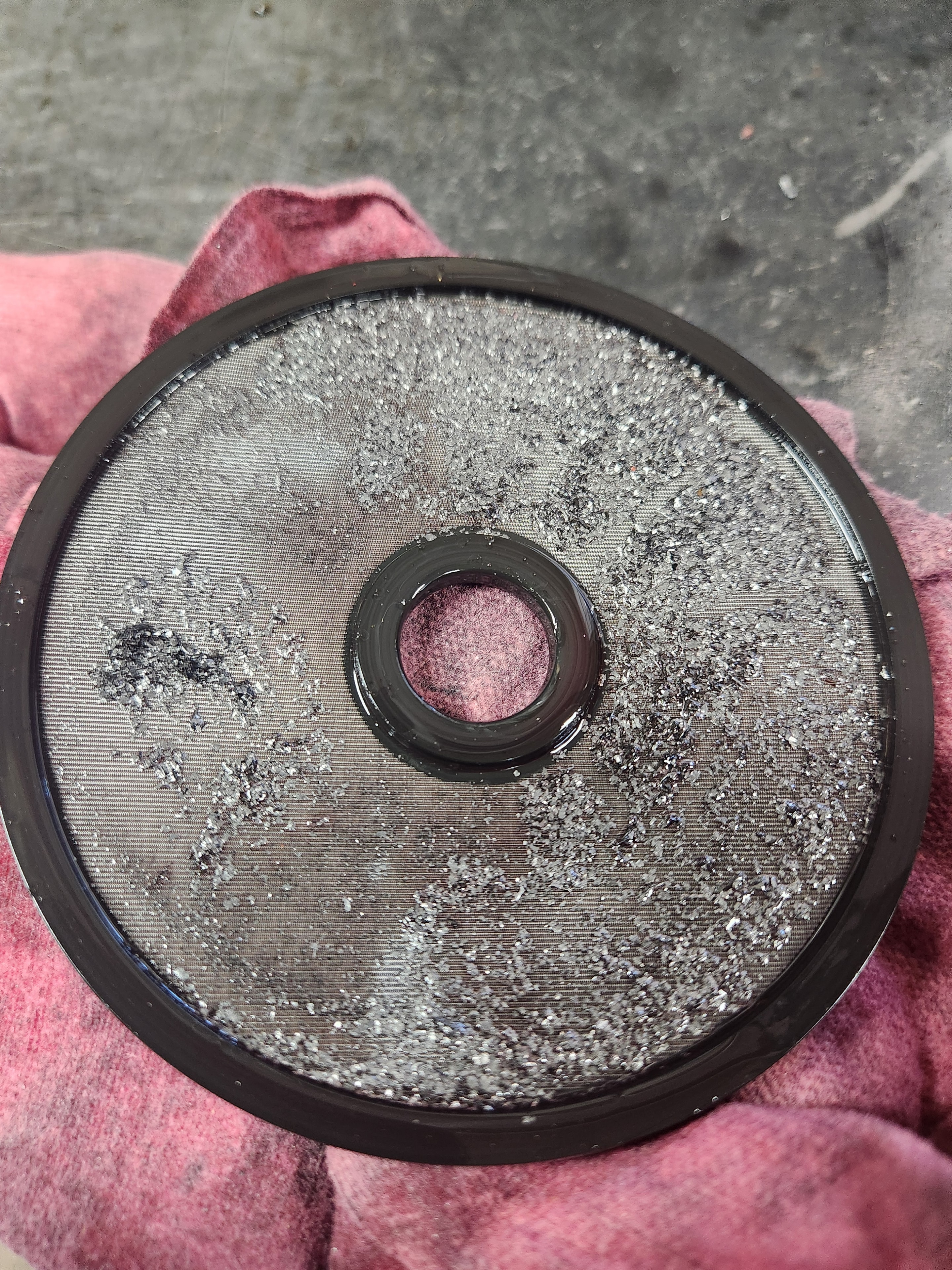
During a fluid inspection, we also look for metal particles or debris in the pan. A small amount of fine metallic residue on the drain plug magnet is normal over a long service interval. Larger particles, chunks, or a significant accumulation of metal debris are a warning sign of internal wear that warrants further investigation before a simple fluid service is performed.
Signs your transmission fluid needs attention:
- Dark brown or black fluid with a burnt smell
- Delayed engagement when shifting from Park to Drive or Reverse
- Slipping — engine revs up but vehicle doesn't accelerate normally
- Rough, hard, or jerky shifts between gears
- Shudder or vibration at highway speeds (often torque converter)
- Transmission warning light or check engine light with shift-related codes
Solenoids and Valve Body: Shift Quality and Hydraulic Pressure
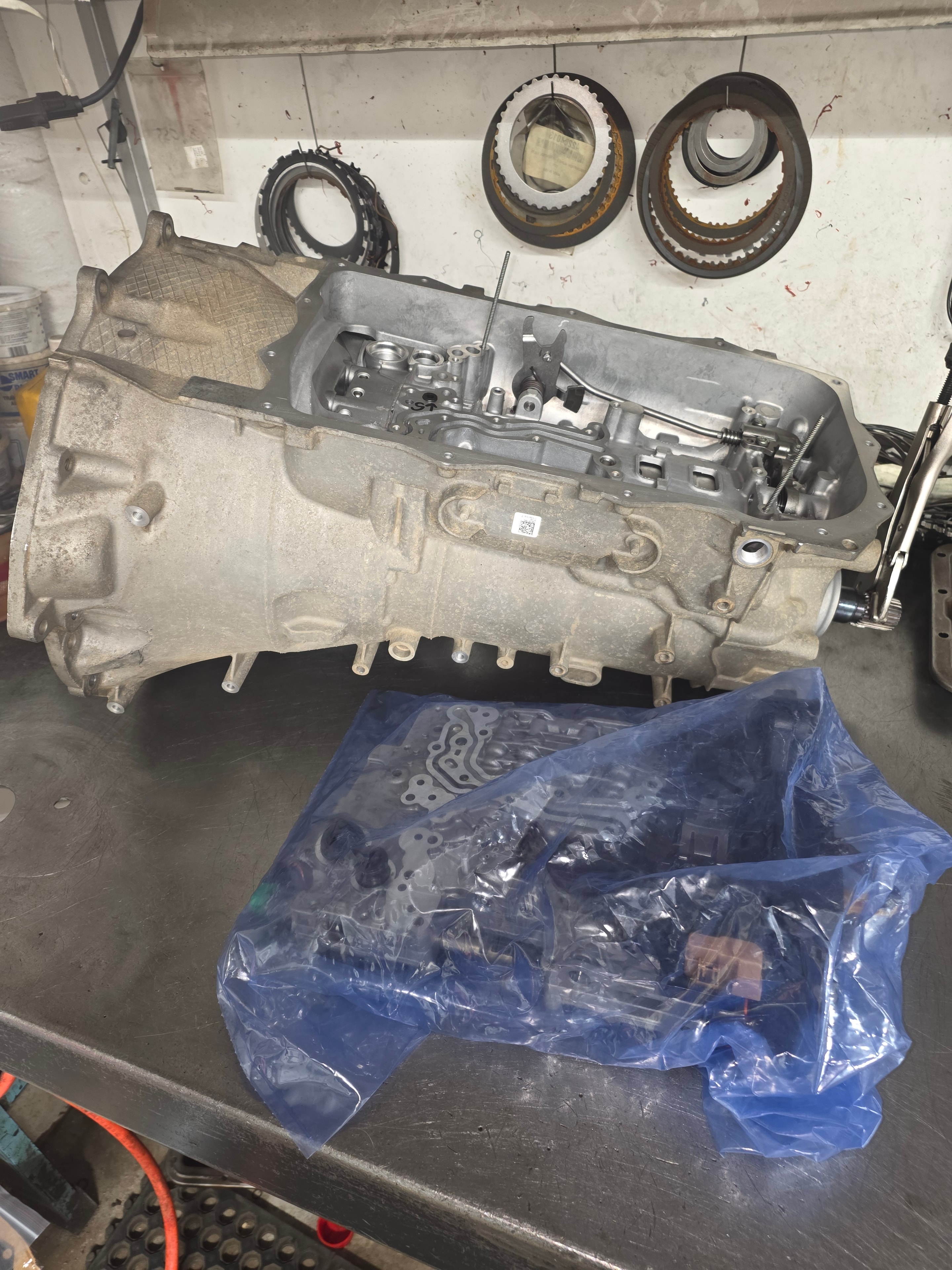
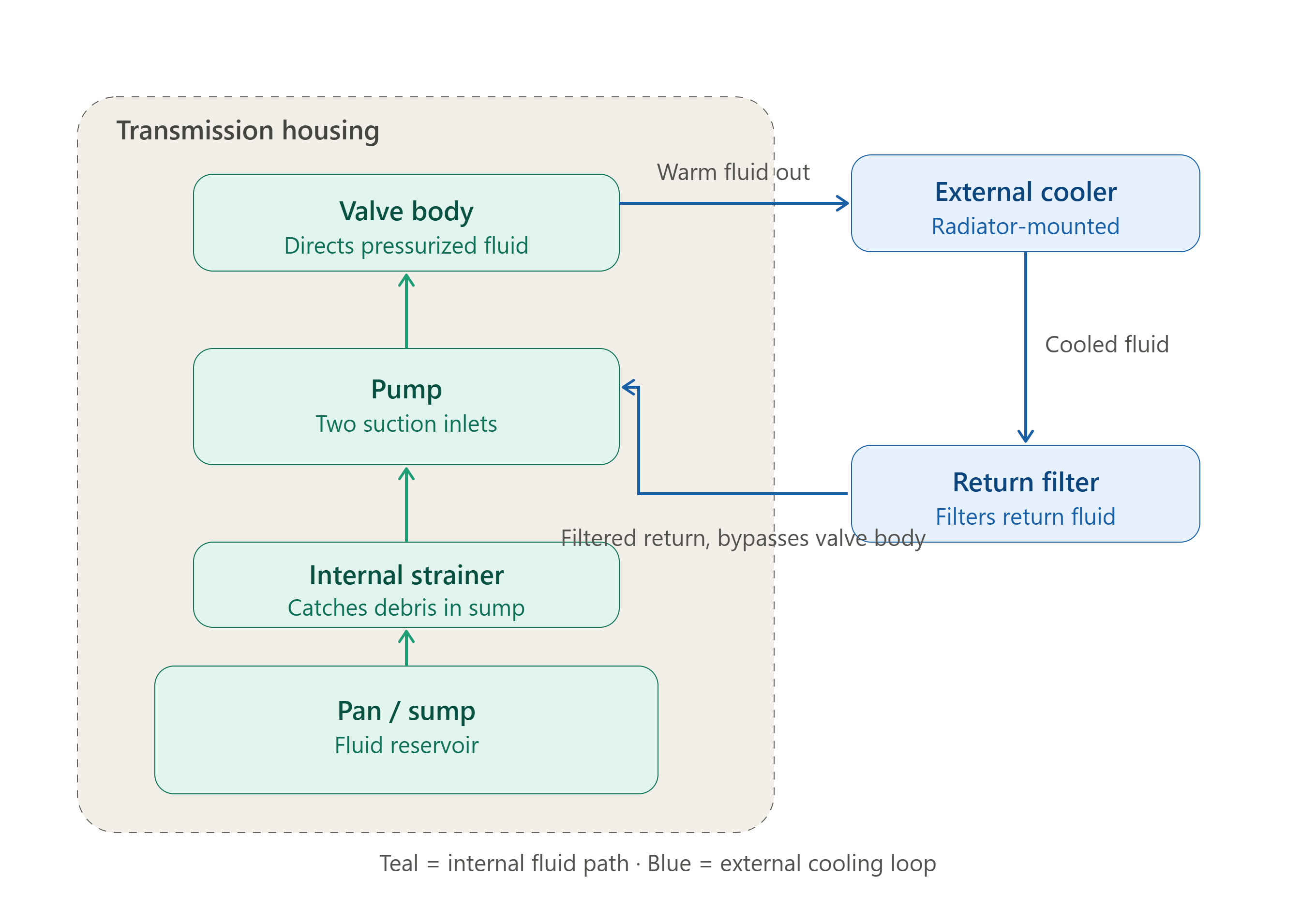
The valve body is the hydraulic control center of an automatic transmission. It contains a network of passages, check balls, and solenoids that direct fluid pressure to the correct clutch packs and bands to execute each gear change. When a solenoid fails or a passage becomes restricted by varnish buildup, the transmission can't apply the right pressure at the right time — resulting in harsh shifts, missed gears, or a transmission that defaults to limp mode.
Solenoid failures are one of the most common causes of shift complaints on modern transmissions. They're often triggered by degraded fluid that leaves varnish deposits on the solenoid's internal components. In many cases, a thorough fluid service combined with a solenoid replacement resolves the issue without requiring a full rebuild — but only if the problem is caught before the contaminated fluid causes broader internal damage.
Torque Converter: Shudder, Lockup, and Clutch Wear
The torque converter connects the engine to the transmission and multiplies torque at low speeds. Most modern torque converters also include a lockup clutch that mechanically locks the converter at highway speeds to improve fuel economy. When this clutch wears or its friction material degrades, it releases fine particles into the transmission fluid — contaminating the entire system and accelerating wear on every other component the fluid touches.
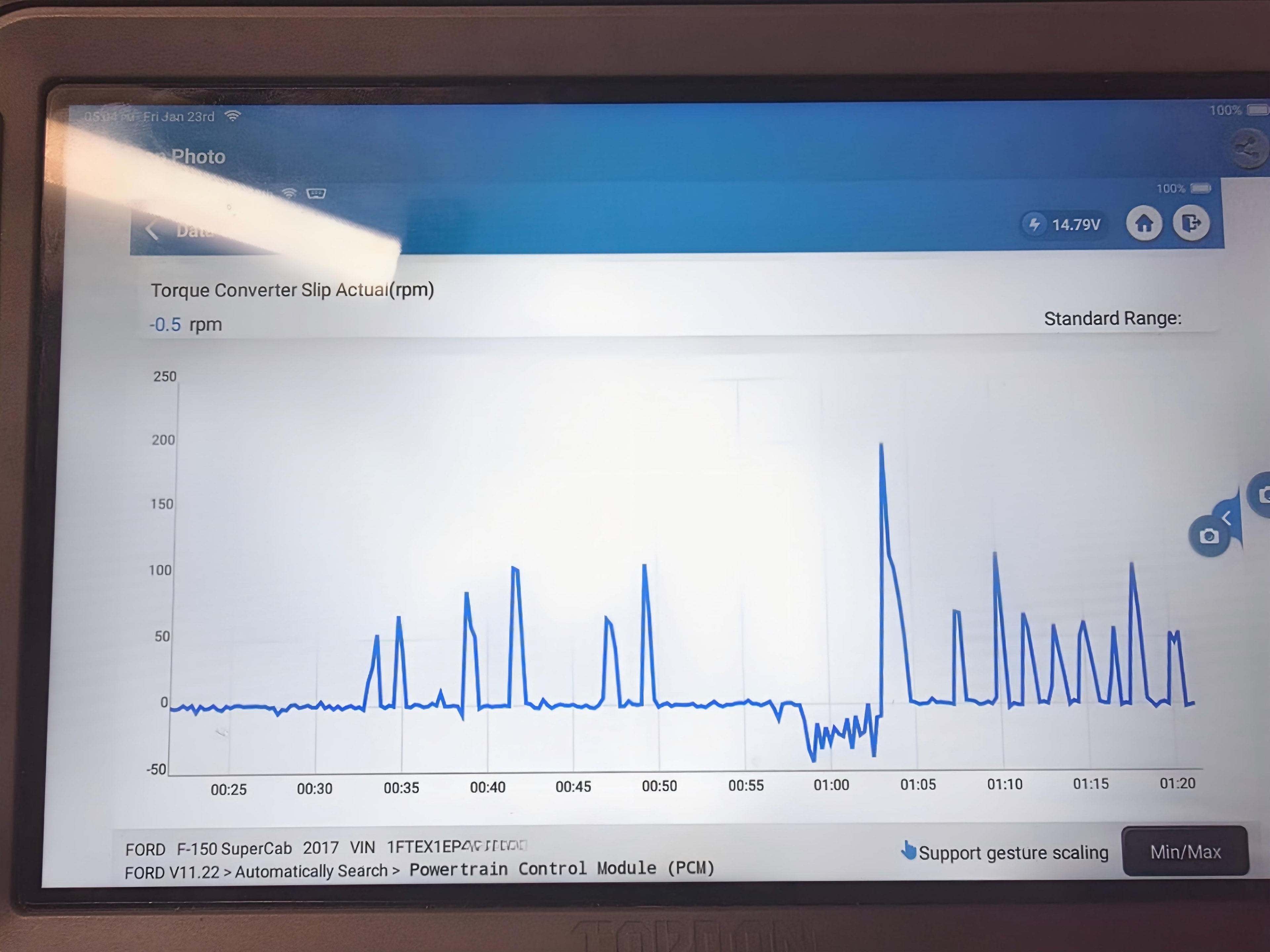
Torque converter shudder — a vibration or shaking sensation felt at light throttle around 40–50 mph — is one of the most common symptoms of a worn lockup clutch. It's often misdiagnosed as an engine misfire or a driveline vibration. In many cases, a hot oil flush combined with a fresh fluid service can resolve early-stage shudder. More advanced cases require torque converter replacement.
Transmission services
Transmissions
Transmission Fluid Service
Our transmission fluid service drains old fluid, replaces the filter, and refills with the correct OEM-specified or AMSOIL synthetic fluid — restoring proper lubrication, cooling, and shift quality.
Transmission Diagnostics
Transmission diagnostics combine a test drive, full module scan, and live data analysis to identify the exact cause of slipping, rough shifts, shudder, or warning lights before any repair is recommended.
Transmission Repair
Targeted transmission repair addresses specific failed components — solenoids, valve body, seals, bands, or sensors — without a full rebuild when the internal clutch packs and hard parts are still serviceable.
Transmission Rebuild
A complete transmission rebuild disassembles the unit, inspects every component, and reassembles it with new clutch packs, seals, gaskets, and any worn hard parts — restoring factory shift quality and reliability.
Transmission Replacement
When a rebuild isn't the right solution, we install a remanufactured or new transmission unit, properly torqued and filled with the correct fluid for your specific vehicle application.
CVT Service & Repair
CVT service includes a fluid exchange with the correct CVT-specific fluid and an inspection of the belt or chain, pulleys, and control system — critical for Nissan, Honda, Subaru, and other CVT-equipped vehicles.
Hot Oil Flush
Our hot oil flush circulates heated solvent through the transmission cooler and lines to dissolve varnish and remove contamination that a standard drain-and-fill can't reach — particularly effective for torque converter shudder.
Rebuild vs. Repair vs. Replacement: How We Decide
One of the most common questions we get is whether a transmission needs to be rebuilt, repaired, or replaced — and the honest answer is that it depends entirely on what the diagnostic finds. A targeted repair addresses a specific failed component without touching the rest of the transmission. A rebuild is appropriate when internal clutch packs, bands, or hard parts show wear beyond serviceable limits. Replacement makes sense when the cost of a rebuild exceeds the value of the vehicle, or when a remanufactured unit offers a better warranty and reliability profile for the application.
We don't default to the most expensive option. Our diagnostic process is designed to identify the minimum intervention that will actually solve the problem — and we explain our reasoning clearly before any work begins.
Transmission Fluid Intervals: What the Manufacturer Doesn't Tell You
Many manufacturers publish transmission fluid service intervals of 60,000–100,000 miles, or label the fluid as "lifetime." These intervals are based on ideal, light-duty driving conditions — not the reality of Texas heat, towing, or stop-and-go commuting. In real-world conditions, most transmission fluid is significantly degraded well before those intervals are reached.
A more realistic guideline for most vehicles is a fluid service every 30,000–50,000 miles, with more frequent service if you tow regularly, drive in extreme heat, or operate in heavy stop-and-go traffic. Using a high-quality synthetic fluid — like AMSOIL — can extend service intervals somewhat, but it doesn't eliminate the need for periodic fluid changes.
CVT Transmissions: Why They Need Special Attention
Continuously variable transmissions use a belt or chain running between two variable-diameter pulleys instead of fixed gear ratios. They're common in Nissan, Honda, Subaru, and many other vehicles. CVTs are particularly sensitive to fluid condition — the fluid must maintain precise friction characteristics to keep the belt or chain from slipping on the pulleys.
Using the wrong fluid, or running degraded fluid too long, is one of the leading causes of premature CVT failure. We use only the correct OEM-specified or approved CVT fluid for each application — never a generic "multi-vehicle" fluid — and we follow the manufacturer's fill procedure to ensure the correct fluid level and pressure.
Serving San Marcos, Kyle, Buda, New Braunfels & Wimberley — Riley Auto Care & Transmissions on TX-123.
Book Service
Vehicles That Are Hard on Transmissions
Certain vehicles and use cases put significantly more stress on a transmission than normal highway driving. Trucks and SUVs used for towing, vehicles driven primarily in stop-and-go traffic, performance vehicles with aggressive shift programming, and any vehicle operating in extreme heat all generate more heat in the transmission — which accelerates fluid degradation and component wear. If your vehicle falls into any of these categories, more frequent fluid service is a worthwhile investment.
How Often Should You Have Your Transmission Serviced?
As a general guideline, we recommend a transmission fluid inspection every 30,000–50,000 miles for most vehicles — more often if you tow, drive in heavy traffic, or operate in extreme heat. Regardless of mileage, any of the warning signs described above — slipping, rough shifts, shudder, delayed engagement, or a warning light — is a good reason to have your transmission looked at sooner rather than later.
Transmissions aren't a system where it makes sense to wait until something fails. Because so many of the components work together, a small issue caught early is almost always a simpler and less expensive fix than the same issue after it's been allowed to progress. If it's been a while since your transmission was serviced, or if you've noticed any changes in how your vehicle shifts, feel free to bring it in — we'll walk you through exactly what we find.
Serving San Marcos, Kyle, Buda, New Braunfels & Hays County
Easy to reach from I-35 and TX-123. Family owned and operated for over 45 years.
Sources & References
- 1.AAMCO – "How Often Should You Change Transmission Fluid?"
- 2.Sonnax – "Torque Converter Clutch Shudder: Causes and Corrections"
- 3.ATSG (Automatic Transmission Service Group) – Technical Service Information
- 4.AMSOIL – "Transmission Fluid Change Intervals"
- 5.Nissan Technical Service Bulletin – CVT Fluid and Filter Service Procedures
- 6.Mitchell1 ProDemand – Transmission Diagnostic and Repair Procedures
Other auto repair services
Transmission Repair Near Me — San Marcos, TX
Conveniently located in the heart of San Marcos, TX, Riley Auto Care & Transmissions is proud to be the trusted destination for expert auto repair in Central Texas.


Ready to Schedule?
Call us or book online — we'll take care of the rest.