The 6R60 / 6R80 Lead Frame: What It Is, Why It Fails, and What a Proper Repair Involves
The Ford 6R80 (and its lighter-duty sibling, the 6R60) is a 6-speed automatic transmission built on a ZF design and used across the F-150, Expedition, Navigator, Mustang, Explorer, and Transit, among others. It's genuinely a strong, well-engineered unit — by most measures, one of the more durable transmissions Ford has used in recent years. But it has one well-known, well-documented weak point that shows up on nearly every vehicle that uses it eventually: the molded lead frame.
Same-Day 6R60 / 6R80 Lead Frame Service — San Marcos, TX
Riley Auto Care & Transmissions — Serving San Marcos, Kyle, Buda, Seguin & New Braunfels
If your Ford is throwing P0720, P0722, or P0731 codes — or showing a dropping speedometer, sudden downshift, or erratic gear indicator — Riley Auto Care & Transmissions offers same-day 6R60 / 6R80 lead frame diagnosis and service in San Marcos, TX.
- Same-day diagnosis for P0720, P0721, P0722, P0731, and P1500 codes
- Full molded lead frame replacement — internal valve body service, not a band-aid
- Filter, valve body-to-case seal, bulkhead connector sleeve, and fluid replaced in the same visit
- Wiring harness connector seals replaced while everything is already apart
- Correct Motorcraft Mercon LV fluid spec — no shortcuts
What the Lead Frame Is and What It Does
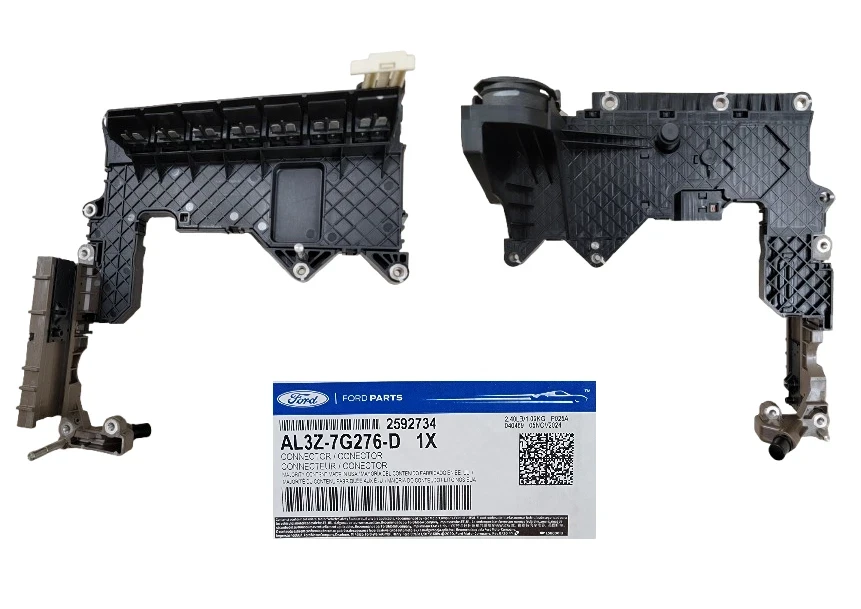
Inside the transmission's valve body assembly sits a component called the molded lead frame — essentially a flexible, plastic-encased circuit board that carries electrical signals between the transmission's internal sensors and solenoids and the vehicle's wiring harness connector. One of its most critical jobs is carrying the signal from the Output Shaft Speed (OSS) sensor, which tells the Powertrain Control Module (PCM) how fast the transmission's output shaft is actually turning — information the computer relies on constantly to determine current vehicle speed and make correct shifting decisions.
The OSS circuit isn't the only thing riding on this component, either. The lead frame also carries the signal paths for the Transmission Range Sensor (TRS), which tells the PCM what gear (park, reverse, neutral, drive) the vehicle is actually in, and the Transmission Fluid Temperature (TFT) sensor, which reports fluid temperature back to the computer. Because all of these signals run through the same molded assembly, a lead frame failure doesn't always show up as a speed-sensor code — it can just as easily show up as an erratic gear-position indicator on the dash or a transmission temperature reading that doesn't match reality.
Because it's molded directly into the valve body assembly and constantly exposed to transmission fluid, heat, and vibration, this component isn't something that can simply be unplugged and swapped like an external sensor. It's an internal part, and when it fails, the transmission has to be opened up to replace it.
Why and How Often It Fails
The lead frame's internal circuitry — including the OSS sensor path molded into it — degrades over time under the combined stress of heat, constant vibration, and prolonged exposure to transmission fluid. Eventually, the circuit develops an open or intermittent short, causing the PCM to lose a reliable signal from the sensor.
This isn't a rare, unlucky failure — it's a widely documented design and manufacturing defect that affects the 6R60 / 6R80 across an enormous range of model years and applications. It was common enough that Ford issued not one but multiple Technical Service Bulletins, a Customer Satisfaction Program with extended warranty coverage, and eventually a formal safety recall to address it — a level of response reserved for issues that are affecting a very large share of the vehicle population, not an isolated defect. In practice, most shops that regularly work on 6R80-equipped Fords will tell you this is one of the single most common repairs they perform on the platform, and it's fair to say that if a 6R60 / 6R80 stays in service long enough, there's a strong chance it will eventually need this repair.
Ford's own running changes support this. In conjunction with rolling out a redesigned lead frame, Ford also updated the transmission's solenoids at the same time — new solenoid identification colors, updated O-rings, and a higher-resistance version of the on/off shift solenoid were all introduced together as part of the same production update, reinforcing that this wasn't a one-off part fix but a broader design revision aimed squarely at the lead frame's failure pattern.
DTC Codes Associated With Lead Frame Failure
When the lead frame's internal OSS circuitry starts to fail, it typically sets one or more of the following diagnostic trouble codes. Ford's own service documentation specifically lists P0720, P0722, P0731, and/or P1500 as the primary indicators for a required lead frame replacement:
- P0720 — Output Speed Sensor Circuit Malfunction
- P0721 — Output Speed Sensor Circuit Range/Performance (signal present but erratic or doesn't match other speed inputs)
- P0722 — Output Speed Sensor Circuit No Signal (a more specific, complete failure of the OSS circuit)
- P0731 — Gear 1 Incorrect Ratio (can appear alongside OSS codes as a downstream symptom)
- P1500 — Vehicle Speed Sensor Intermittent Failure
Common Symptoms
Owners and technicians consistently report a very similar cluster of symptoms when this component starts to fail. The unintended downshift is the most serious — because it can happen without warning at highway speed, it briefly and abruptly reduces wheel speed, which can cause the rear tires to slide or lock up, a real loss-of-control risk, not just an inconvenience:
- Wrench light and/or check engine (MIL) light illuminating in the instrument cluster
- Speedometer and tachometer dropping to zero or going dark
- Odometer display turning into dashes
- Seatbelt light and, in some cases, airbag light illuminating alongside the transmission symptoms
- Sudden, unintended downshift into 1st or 2nd gear, sometimes while driving at highway speed
- Transmission becoming stuck in a single gear (often defaulting to a higher gear as a protective "failsafe") until the ignition is cycled
- A noticeable lunge, hesitation, or decrease in power
- Symptoms that are intermittent at first, then become more frequent over time as the internal circuit continues to degrade
- Erratic or inaccurate transmission fluid temperature readings, since the temperature sensor is also mounted on the lead frame
- An erratic gear-position (PRND) indicator on the dash, since the transmission range sensor signal runs through the same component
TSBs and Recalls
This issue has a long paper trail with Ford, spanning multiple bulletins, an extended warranty program, and more than one safety recall:
- TSB 13-2-3 / TSB 13-4-9 — Early bulletins addressing failsafe conditions and OSS-related codes on affected 6R60 / 6R80 applications
- TSB 13-6-8 — Addresses wrong-gear starts along with P0720/P0722 on certain Mustang and F-150 applications, directing technicians to replace the molded lead frame
- TSB 11-3-25 — Covers transmission fluid leakage from the bulkhead connector sleeve, a related component often serviced at the same time
- Customer Satisfaction Program 19N01 (TSB 19N01-S3) — Extended warranty coverage specifically for the molded lead frame on certain 2011–2013 F-150s and 2012–2013 Expeditions/Navigators, extending coverage to 10 years or 150,000 miles for vehicles showing the associated codes
- Safety Recall 19S07 (with follow-up 19S19) — A separate recall addressing the sudden downshift hazard via a PCM software reflash
- 2026 recall covering roughly 1.3–1.4 million 2015–2017 F-150s — tied to the same underlying lead frame degradation causing incorrect transmission range signal data and unexpected downshifts from as high as 6th gear down to 2nd
An Important Distinction: What the Recall Actually Fixes
This is a point of real confusion for a lot of owners, so it's worth being direct about it: the safety recall (19S07 and its successors) does not repair the lead frame. It's strictly a PCM software reflash designed to change how the computer responds if it receives a faulty or missing OSS signal — specifically, to prevent the abrupt, dangerous downshift that can cause rear wheel lockup. That's a genuinely important safety fix, and it should absolutely be completed if your vehicle qualifies.
But the recall doesn't address why the signal fails in the first place. The lead frame itself is still degrading, and the underlying sensor circuit issue remains. The only actual fix for the lead frame failure is physically replacing the lead frame assembly — the recall just changes how the vehicle behaves if and when the sensor signal drops out, rather than preventing that dropout from happening.
A Note on Warranty Coverage
Because the extended warranty program (19N01) applies to specific model years — mainly 2011–2013 — and was time/mileage limited even for those vehicles, most affected trucks and SUVs on the road today have simply aged out of that coverage. If your vehicle originally qualified, it's worth confirming with a dealer whether any coverage window remains, but at this point, most owners bringing a vehicle in for this repair should expect to pay for it out of pocket as a standard transmission service rather than assume it will be covered.
Doing the Job Correctly: Parts Replaced Alongside the Lead Frame
Because replacing the lead frame requires removing the valve body, a proper repair is a good opportunity to address several related wear items at the same time, rather than reusing them and risking a comeback for an unrelated leak shortly after:
- Transmission filter — should always be replaced any time the valve body or pan is removed
- Valve body-to-case seal — a rectangular seal that sits between the valve body and the transmission case; reusing a worn one is a common cause of internal pressure leaks after reassembly
- Bulkhead connector sleeve seal — specifically flagged in Ford's own bulletin (TSB 11-3-25) as a known leak point; should be replaced with the updated version when available
- Transmission fluid — a full refill using the correct Motorcraft Mercon LV specification, generally 7–10 quarts depending on how much fluid is displaced during the service
- Pan gasket (if the pan is a reusable/gasketed style rather than a factory-sealed unit)
A Best Practice Worth Mentioning: Wiring Harness Connector Seals
One detail that's easy to overlook, but well worth doing while everything is already apart: replacing the seals on the exterior wiring harness connector where it plugs into the transmission case. This connector is disturbed during the lead frame service, and its seals are exposed to the same heat and age-related hardening as every other rubber component on the vehicle. Replacing them at the same time is inexpensive, takes very little additional labor given that the connector is already being handled, and helps prevent a separate, unrelated comeback down the road for an external electrical connection leak or corrosion issue.
The Bottom Line
The 6R60 / 6R80 is, on the whole, a genuinely solid transmission — but the molded lead frame is its defining weak point, and it's one that touches a huge share of the vehicles built with this unit, not a rare exception. Between the documented TSBs, the extended warranty program, and the eventual safety recalls, Ford's own paper trail confirms just how widespread this issue has been. The recall reflash is worth doing for the safety benefit alone, but it isn't a substitute for the actual repair. If your vehicle is showing any of the codes or symptoms above, the lead frame itself needs to be replaced — and doing that job right means addressing the filter, seals, and connector at the same time, so you're not back in the shop again for something that could have been handled in the same visit.
If you have any questions about your specific vehicle's history with this issue, or want to know whether any warranty coverage might still apply, we're happy to look into it with you.
6R60 / 6R80 Lead Frame Service — San Marcos, TX
Serving San Marcos, Kyle, Buda, Seguin, New Braunfels, and the surrounding Central Texas region. If your Ford vehicle is showing OSS codes, a dropping speedometer, or an unexpected downshift, call or book online — we'll diagnose it right and fix it properly.
Location
6R60 / 6R80 Lead Frame Service Near Me — San Marcos, TX
Conveniently located at 1334 TX-123, San Marcos, TX 78666 — easy access from I-35, serving Kyle, Buda, New Braunfels, Wimberley, and all of Central Texas.
Sources & Further Reading
The technical information on this page was compiled from the following industry sources.
- 1.Gears Magazine — "Updates to the Ford 6R80"
- 2.Gears Magazine — "Updates to the Ford 6R80 Part 2"
- 3.Gears Magazine — "Multiple 6R60E/6R80E Problems Traced to Bulkhead Connector"
- 4.Gears Magazine — "Ford Solenoid Strategy Numbers: Is It Necessary to Program?"
- 5.Transmission Digest — November 2015 Issue (Mustang 6R80 high-gear starts / lead frame case study)
- 6.Transmission Digest — "Ford 6R60/6R80 Erratic Temperature Operation"
- 7.Transmission Digest — "Diagnosis: Do the Homework"
- 8.Transmission Digest — "Ford 6R80 & 6R140: Troubleshooting timing-related shift issues"
- 9.Ford TSB / Customer Satisfaction Program 19N01 (NHTSA filing)
- 10.NHTSA Safety Recall 19S07
- 11.NHTSA Safety Recall 19S07 Supplement
- 12.Go-Parts.com — P0722 guide (2011–2013 F-150)
- 13.Go-Parts.com — P0720 guide (Ford Transit)
- 14.Go-Parts.com — P0720 guide (2011–2013 F-150 6R80)
- 15.Ford-Trucks.com — "1.4 Million F-150s Recalled Over 6R80 'Unexpected Downshift' Gearshift Flaw"
- 16.TFLtruck.com — "Ford Officially Recalls 1.3 Million 2015–2017 F-150 Trucks"