The Ford 10R80 — What You Need to Know
The Ford 10R80 ten-speed automatic transmission is found in F-150s, Mustangs, Expeditions, and other Ford and Lincoln vehicles from 2017 onward. It's a capable transmission, but it has a number of known issues that Ford owners encounter — particularly around shift quality, shudder, and internal component wear.
Common complaints include harsh or jerky shifts (especially at low speeds), torque converter shudder, CDF drum bushing movement, and outer shell wear that causes incorrect shift scheduling concerns. Many of these issues can be addressed with proper programming, targeted repairs, or component upgrades.
10R80 Services We Offer
Our 10R80 service capabilities include:
- TCM programming and calibration updates
- Shift quality tuning — eliminating harsh or jerky shifts
- Torque converter shudder diagnosis and repair
- CDF drum bushing replacement — a common failure point
- Solenoid pack replacement
- Full transmission repair or rebuild
- Remanufactured unit replacement with fast turnaround
- Fluid service with AMSOIL synthetic ATF
CDF Drum Bushing Solutions — San Marcos, TX
Riley Auto Care & Transmissions — Serving San Marcos, Kyle, Buda, Seguin & New Braunfels
The CDF drum bushing is a known weak point in the 10R80. When it fails, it causes delayed engagement, slipping, and eventually more serious internal damage. We stock the updated bushing solution and can address this repair quickly — often without a full rebuild.
- Available on select vehicles
- Less than 110,000 miles
Understanding the 10R80's Known Issues
The 10R80 is a sophisticated piece of engineering, but like any complex machine, it has a few well-known weak spots. Here's a plain-language breakdown of the issues we see most often — what they are, why they happen, and how they're connected.
CDF Drum Bushing Movement — Think of the CDF drum as a rotating metal cylinder inside your transmission that helps control three of the gears (Ford engineers labeled them C, D, and F — hence the name). Inside this drum sits a small sleeve, called a bushing, that the drum spins around. On many 10R80 transmissions built before late 2022, that bushing was installed without anything to firmly hold it in position. Transmission fluid runs hot — typically 195–215°F during normal driving — and as metal parts heat up and cool down repeatedly, they expand and contract at slightly different rates. Over time, that constant flexing lets the bushing gradually "walk" out of its original spot. When it shifts out of place, it partially blocks the tiny fluid passages that supply pressure to the clutches responsible for 7th through 10th gear. Without enough pressure, those clutches can't grip properly — which is often what causes slipping, hesitation, or a brief neutral feeling while driving. Ford issued TSB 22-2428 covering this issue. The fix requires opening the transmission and replacing the drum with a redesigned version that has a proper retaining lip.
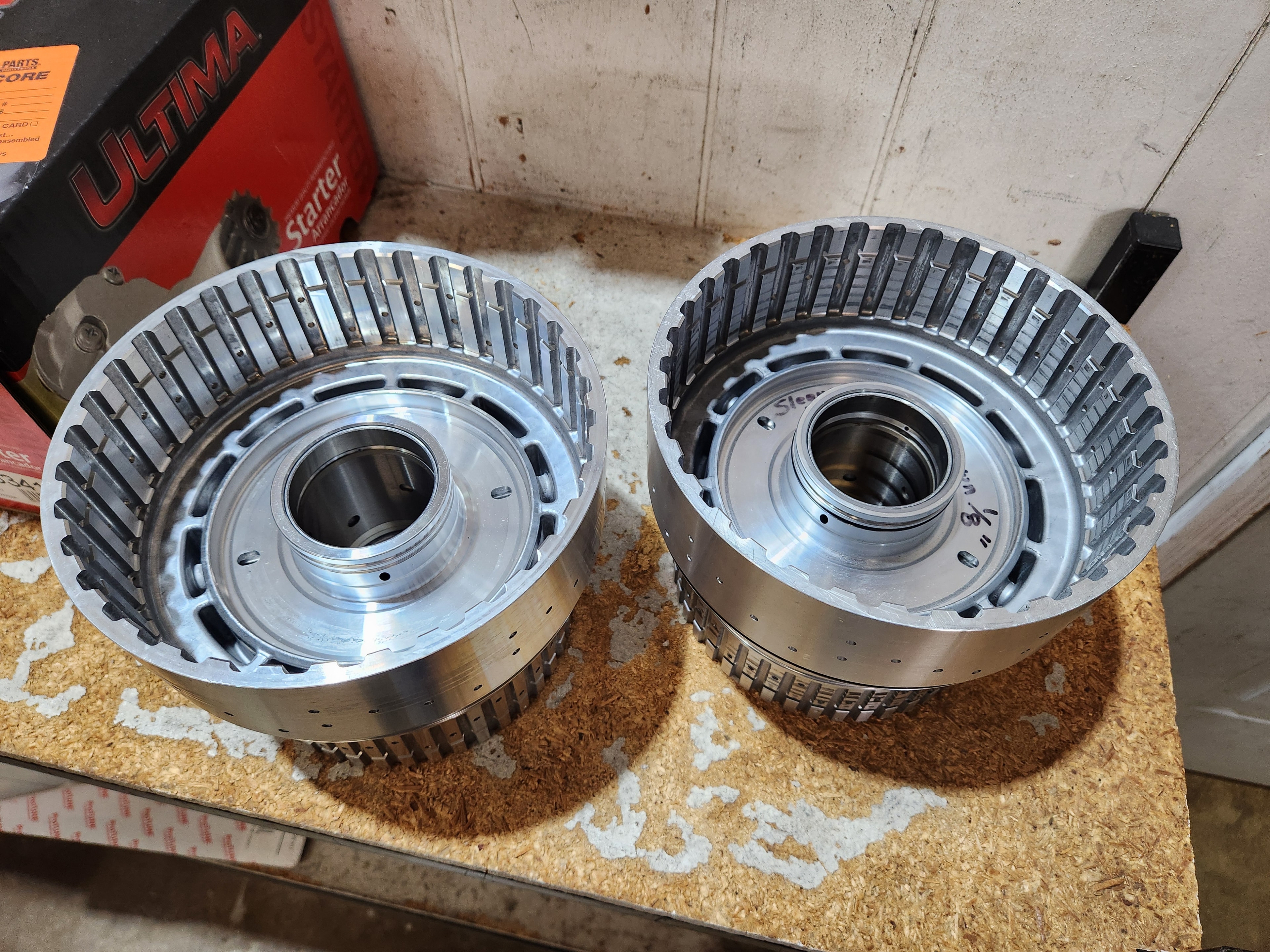
Outer Shell Wear — Inside the transmission, stacks of disc-shaped clutch plates slide back and forth inside metal shells to engage and disengage each gear. On the 10R80, those outer shells are aluminum while the clutch plates are harder steel. Every time the transmission shifts, the steel plates rub against the softer aluminum shell. Over tens of thousands of shifts, the steel can wear small grooves into the aluminum surface. Once those divots form, clutch plates can catch or stick in them instead of moving smoothly — resulting in rough, delayed, or unpredictable shifting. This is a wear-and-use issue that develops gradually and worsens under heavier use like towing or hauling.
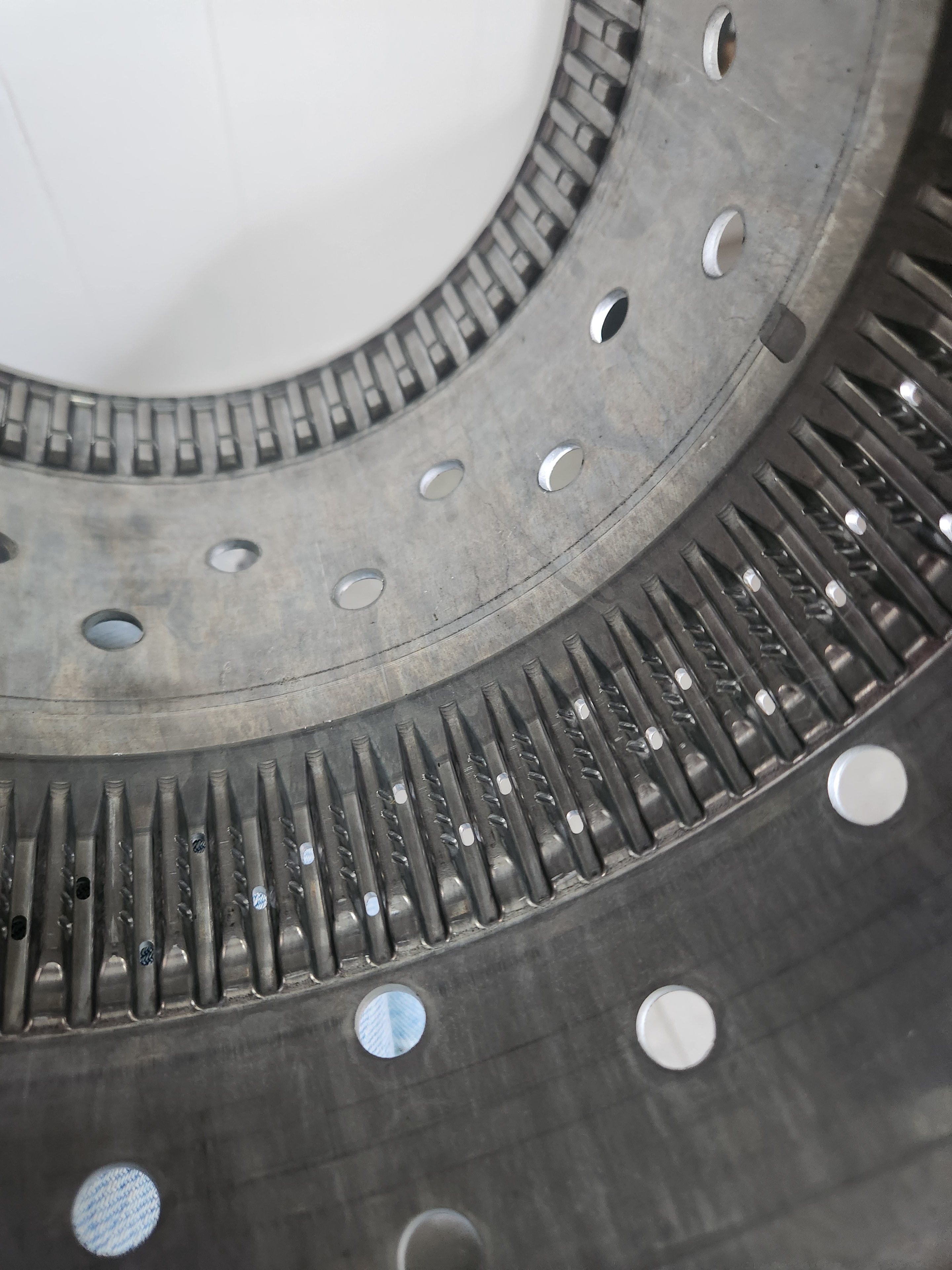
Valve Body Wear — The valve body is a complex block containing dozens of tiny channels and precision valves that direct pressurized fluid exactly where it needs to go to make each gear shift happen smoothly. The 10R80's valve body is made from a relatively soft aluminum alloy. As the transmission operates, microscopic metal particles from normal wear can gradually erode and enlarge the tiny passages and valve bores inside it. Once those passages wear beyond their intended dimensions, fluid pressure becomes inconsistent and the transmission can no longer control shifts accurately — showing up as erratic shifting, delayed engagement, or shift points that don't match driving conditions. Most experienced transmission technicians recommend replacing the valve body entirely any time a 10R80 is rebuilt.
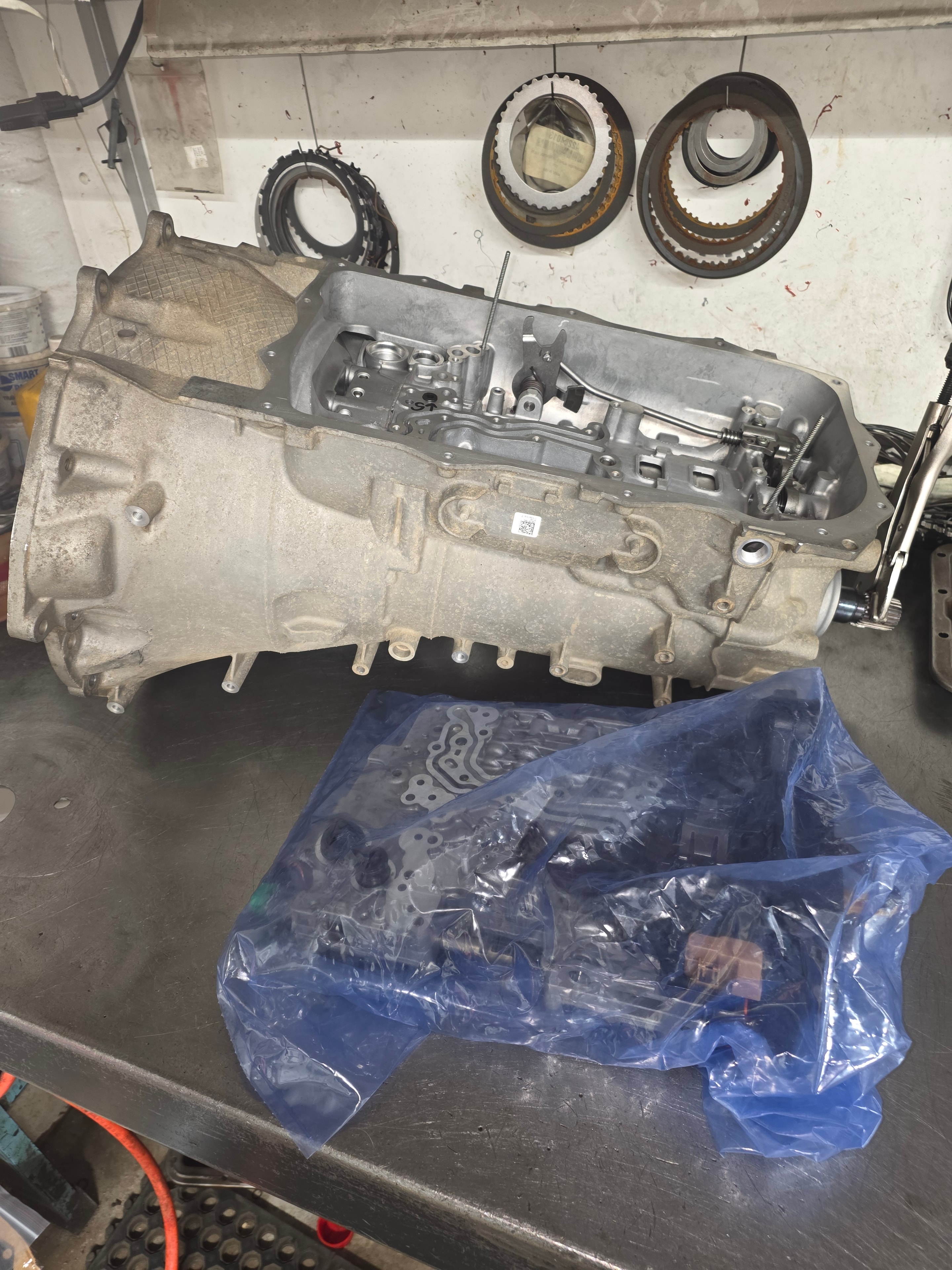
Fluid Degradation — Transmission fluid lubricates moving parts, transfers heat away from clutches and gears, and — most importantly for the 10R80 — acts as the hydraulic muscle that applies pressure to engage each gear. As fluid ages, it breaks down chemically from constant heat cycling and picks up fine metal particles generated by the wear described above. Degraded fluid doesn't hold pressure as consistently, doesn't lubricate as effectively, and can contribute to the same erratic shifting symptoms as the mechanical wear itself. Fluid degradation both results from and accelerates the other issues — it's part of the same feedback loop.
Torque Converter Shudder — The torque converter connects your engine to the transmission. At highway speeds, a clutch inside it (the torque converter clutch, or TCC) locks the engine and transmission together directly to improve fuel efficiency. Shudder happens when that clutch struggles to lock up smoothly — instead of engaging cleanly, it grabs and slips repeatedly. You'll typically feel this as a buzzing or shaking sensation, often described as driving over rumble strips, most noticeable during light acceleration or steady cruising between 35–55 mph. It tends to ease up if you press the accelerator harder or let off the gas. The friction material on the clutch surface can wear down or glaze over time, and degraded or contaminated fluid makes the problem worse. Light additives can mask the symptom temporarily, but once the friction material is damaged, a lasting fix usually means replacing the torque converter and refreshing the fluid.
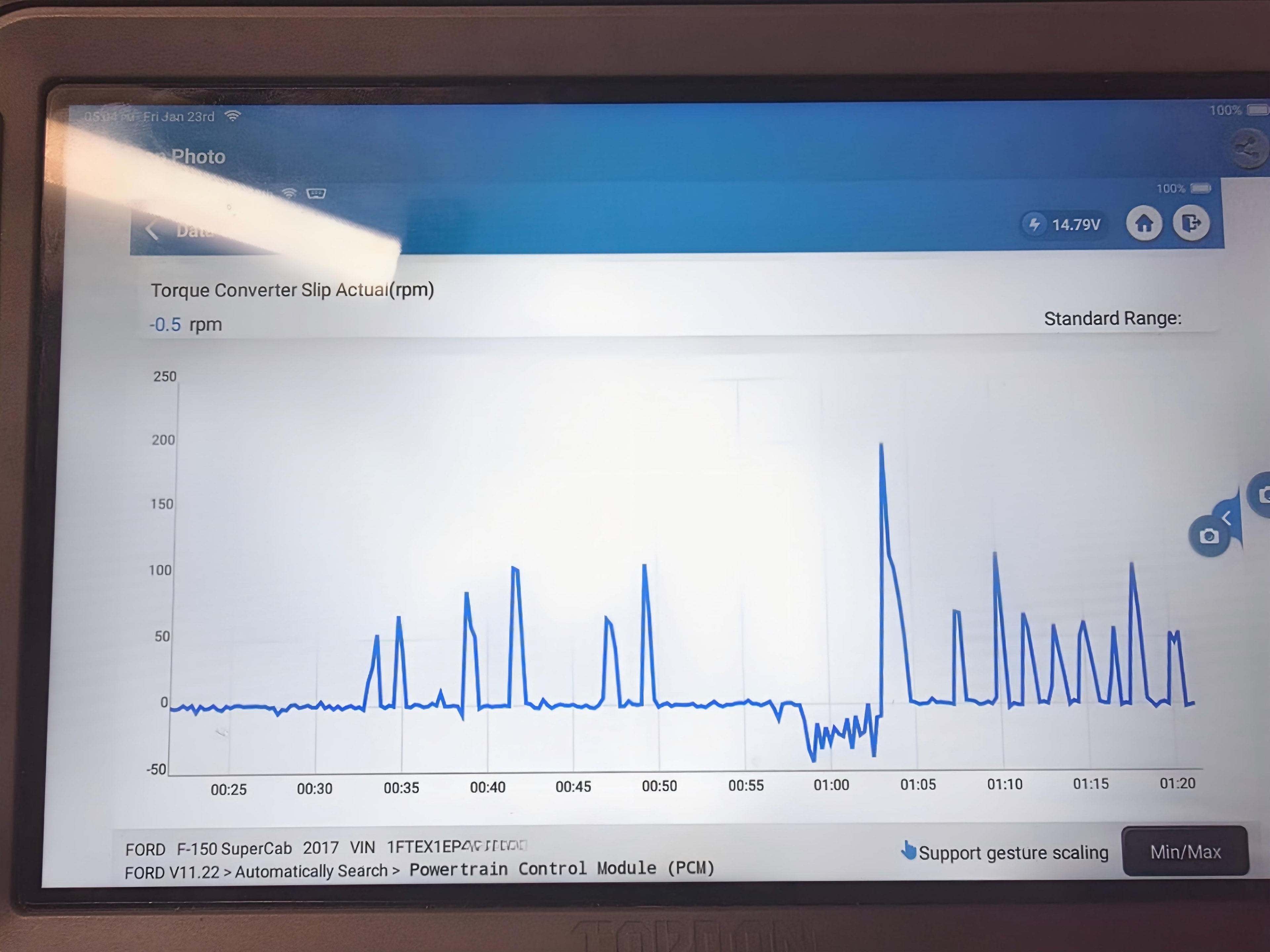
How These Issues Connect — These five problems aren't isolated. Bushing movement restricts fluid flow, worn shells and valve bodies generate metal debris that contaminates the fluid, and degraded fluid then struggles to deliver the consistent pressure the transmission needs to shift properly — including the pressure the torque converter clutch relies on to lock up without shuddering. That's why addressing just one issue in isolation often isn't enough for a lasting repair. A proper rebuild typically involves replacing the CDF drum, addressing shell wear, replacing the valve body, servicing or replacing the torque converter, and refreshing the fluid — all together.
10R80 Transmission Service — San Marcos, TX
Serving San Marcos, Kyle, Buda, Seguin, New Braunfels, and the surrounding Central Texas region. If your Ford is having 10R80 issues, call or book online — we know this transmission well and can get you back on the road fast.
Location
10R80 Transmission Solutions Near Me — San Marcos, TX
Conveniently located at 1334 TX-123, San Marcos, TX 78666 — easy access from I-35, serving Kyle, Buda, New Braunfels, Wimberley, and all of Central Texas.
Why Ford Went to the 10-Speed Transmission
For most of the automatic transmission's history, four, five, or six forward gears were considered plenty. Then, within the span of about a decade, the industry leapt to eight, nine, and even ten speeds. Ford's move to a 10-speed automatic wasn't a marketing gimmick — it was the product of tightening fuel economy regulations, a rare partnership with its biggest rival, and a genuine engineering push to squeeze more performance and efficiency out of every gallon of fuel.
The Regulatory Push
The single biggest driver behind the 10-speed transmission was fuel economy. Corporate Average Fuel Economy (CAFE) standards pushed automakers to produce more fuel-efficient vehicles, and manufacturers responded by evolving their transmissions to provide more gears — six at minimum, and in some cases as many as ten. Where 1990s transmissions typically offered only three to five speeds, the 2017 model year brought what one industry publication called a genuine leap forward. That leap came from a collaboration between Ford and General Motors to develop two of the most advanced transmissions in the industry — a 10-speed and a nine-speed — first announced in 2013.
An Unlikely Partnership
Ford and GM are natural rivals, so the decision to co-develop a transmission raised eyebrows. But it wasn't the first time the two had worked together this way — it followed an earlier partnership that had produced the six-speed planetary-gear program responsible for millions of transaxles. This time, the labor was divided by vehicle architecture: Ford led engineering on a 10-speed unit for longitudinally mounted, rear-wheel-drive applications, while GM led development of a transverse 9-speed unit for front-wheel-drive platforms. Ford's version became known internally as the 10R80, while GM's counterpart became the 10L80/10L90. The 10R80 first rolled off the line at Ford's Livonia Transmission Plant in Michigan, with Sharonville, Ohio taking over production in 2018. The economics mattered too. Splitting the enormous R&D cost of an all-new transmission architecture let both companies field a competitive product faster and cheaper than going it alone — even though, as it turned out, Ford later acknowledged it "didn't get quite the result [it] anticipated" from the arrangement, five years after the deal was signed.
Why More Gears at All?
The logic behind stacking so many ratios into one gearbox comes down to keeping the engine in its sweet spot as often as possible. The small gear steps in the 10-speed allow engine speed to drop to lower values than a 6-speed could manage, which is what delivers the fuel economy gains — while at heavy throttle, those same small steps keep the engine closer to its horsepower peak for better performance. In practical terms, that meant Ford's engineers built in real intelligence around how the transmission shifts. Ford describes two distinct shift strategies — single-step and double-step (or "skip") shifts — where the transmission decides whether to move through adjacent gears or jump several at once, depending on throttle input and load. The hardware itself was a significant departure. The 10R-series design uses four planetary gear sets and six clutch assemblies — four rotating clutches and two brake clutches — to produce ten forward ranges and one reverse gear. A unique triple-clutch assembly mounted on a dedicated intermediate shaft was the key innovation that let Ford package all ten gears into roughly the same space as its previous, simpler transmissions. Ford also broke new ground on materials: the 10-speed was Ford's first transmission built without any cast-iron components, using lighter materials to save weight, paired with real-time adaptive shift-scheduling software that reads more than a dozen powertrain and driver signals to select the right gear.
Real-World Results
The results showed up quickly in Ford's flagship products. Ford's 10R80 made the Mustang GT noticeably quicker — the pre-facelift six-speed automatic Mustang needed around 4.3 seconds to hit 60 mph, but once the 10-speed arrived, it became the first factory S550 Mustang GT to break the 4.0-second barrier. On the truck side, the 10-speed's wide gear spread paid off in both directions — steep enough at the bottom for strong low-speed torque, and tall enough at the top for quiet, efficient cruising. Ford's F-150 with the 10-speed sees engine RPM drop only about 20 percent during an average shift, versus a 25 percent drop with a comparable ZF eight-speed — meaning the Ford unit does a better job keeping the engine near its efficient operating range. Ford later extended the same basic architecture up and down its lineup, using the original 10R80 as the blueprint for the heavier-duty 10R140 (for Super Duty trucks) and the smaller 10R60. On the Super Duty line specifically, the 10-speed TorqShift replaced the six-speed 6R140 — and despite adding four extra gears' worth of hardware, the new unit weighed only about 3.5 pounds more than the transmission it replaced.
The Trade-Off: Complexity
Packing ten gears, six clutches, and adaptive electronic controls into one unit didn't come free. Transmission specialists who work on these units day-to-day have been candid about the downside. According to Next Gen Drivetrain, a company that engineers aftermarket upgrades for the platform, the 10R80 has developed a reputation in the field as a comparatively fragile design — prone to issues like valve body cross-leakage, burnt clutches, damaged clutch hubs, and stripped shells, with an average service life in the 100,000–150,000 mile range for unmodified trucks under typical use. ATRA's trade publication, Gears Magazine, has covered similar ground for the professional repair industry, noting that while the 10R-series has proven sturdy enough to handle the torque and horsepower of Ford's Coyote V8 and diesel engines, subtle internal issues remain that can shorten the transmission's service life, with adaptive control strategies sometimes masking early internal failures until they finally trigger diagnostic trouble codes.
The Bottom Line
Ford's move to the 10-speed automatic was ultimately about threading a needle: satisfying federal fuel economy mandates without sacrificing the towing, acceleration, and drivability that trucks and performance cars are judged on. Partnering with GM split the enormous engineering bill for an all-new architecture, and the payoff — smaller, more numerous gear steps that let the engine idle down on the highway and stay in its power band under load — delivered real gains in both fuel economy and performance. The trade-off has been mechanical complexity: more clutches, tighter tolerances, and more sophisticated software than any previous Ford automatic, which has translated into a documented set of reliability concerns as these transmissions age out of their factory warranties and into independent repair shops.
Sources & References
The technical information on this page was compiled from the following industry sources.
- 1.Ford Motor Company — Product announcements and technical service bulletins, including TSB 22-2428
- 2.Next Gen Drivetrain — 10R80 technical analysis and component documentation
- 3.Gears Magazine — ATRA — Automatic Transmission Rebuilders Association trade publication
- 4.Automotive Fleet — Fleet vehicle transmission service and reliability reporting
- 5.Ford Authority — Ford-specific technical news and TSB coverage
- 6.MotorBiscuit — Consumer-facing automotive reliability and issue reporting
- 7.Transmission Digest — Professional transmission repair industry publication