A/C & Heating Repair
in San Marcos, TX
When Texas heat hits, a weak A/C stops being an inconvenience and becomes a real problem. We diagnose first, explain everything clearly, and only recommend what your system actually needs.

Every A/C Repair Backed by Our 24-Month / 24,000-Mile Warranty
We stand behind every A/C and heating repair we perform. If something isn't right, bring it back — we'll make it right. No runaround, no excuses.
Signs your A/C or heater needs attention
Common questions
Quick Answers About Your A/C System
Why is my A/C blowing warm air?
The most common causes are low refrigerant (almost always due to a leak — refrigerant doesn't just "run out"), a failing compressor, a clogged cabin air filter restricting airflow, or an electrical fault preventing the compressor clutch from engaging.
Is it okay to just add refrigerant myself?
Not really. If your system is low, refrigerant escaped somewhere — meaning there's a leak. Adding more without finding and fixing that leak usually means you'll be back to warm air within weeks, and you'll have spent money without solving the actual problem.
Why does my A/C cool fine sometimes and not other times?
Inconsistent cooling often points to an electrical issue — a failing pressure sensor, a compressor clutch cycling incorrectly, or a control module fault — rather than a simple refrigerant problem. This is exactly the kind of symptom that benefits from a real diagnostic scan.
Does my heater use the same system as my A/C?
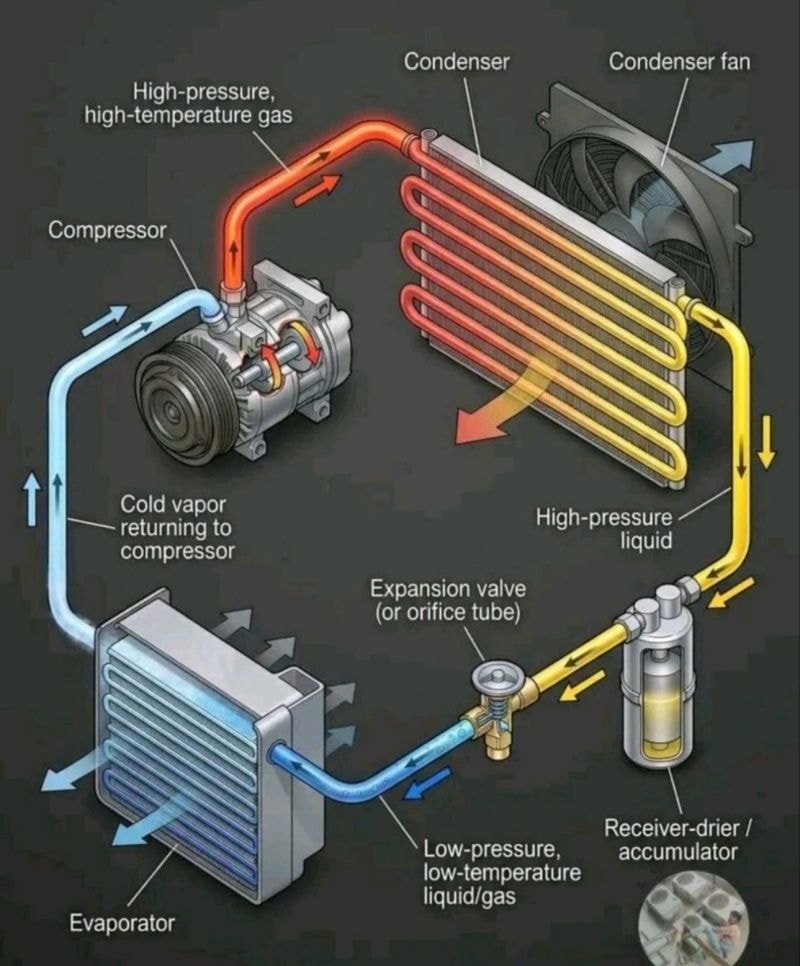
Partially. Your heater relies on engine coolant circulating through the heater core, while your A/C relies on refrigerant and a separate set of components. They share the same blower motor, vents, and control system — which is why HVAC problems can sometimes affect both at once.

How often?
Most vehicles benefit from having the A/C system checked at least once a year — ideally before the hot season starts. A checkup before summer can catch a slow leak or weak component before it leaves you without cooling on the hottest day of the year.
Riley Auto Care & Transmissions — A/C & heating service for all makes and models in San Marcos, TX.
Book ServiceWhat we do
Our A/C & Heating Services
All makes and models — domestic trucks, import sedans, SUVs, and everything in between.
A/C System Inspection & Performance Test
Full pressure and temperature evaluation to confirm how the system is actually performing.
Refrigerant Recharge (R-134a & R-1234yf)
Proper recovery, evacuation, and recharge to manufacturer spec — after confirming no active leak.
Refrigerant Leak Detection & Repair
UV dye or electronic detection to find the source, then repair before recharging.
Compressor Service & Replacement
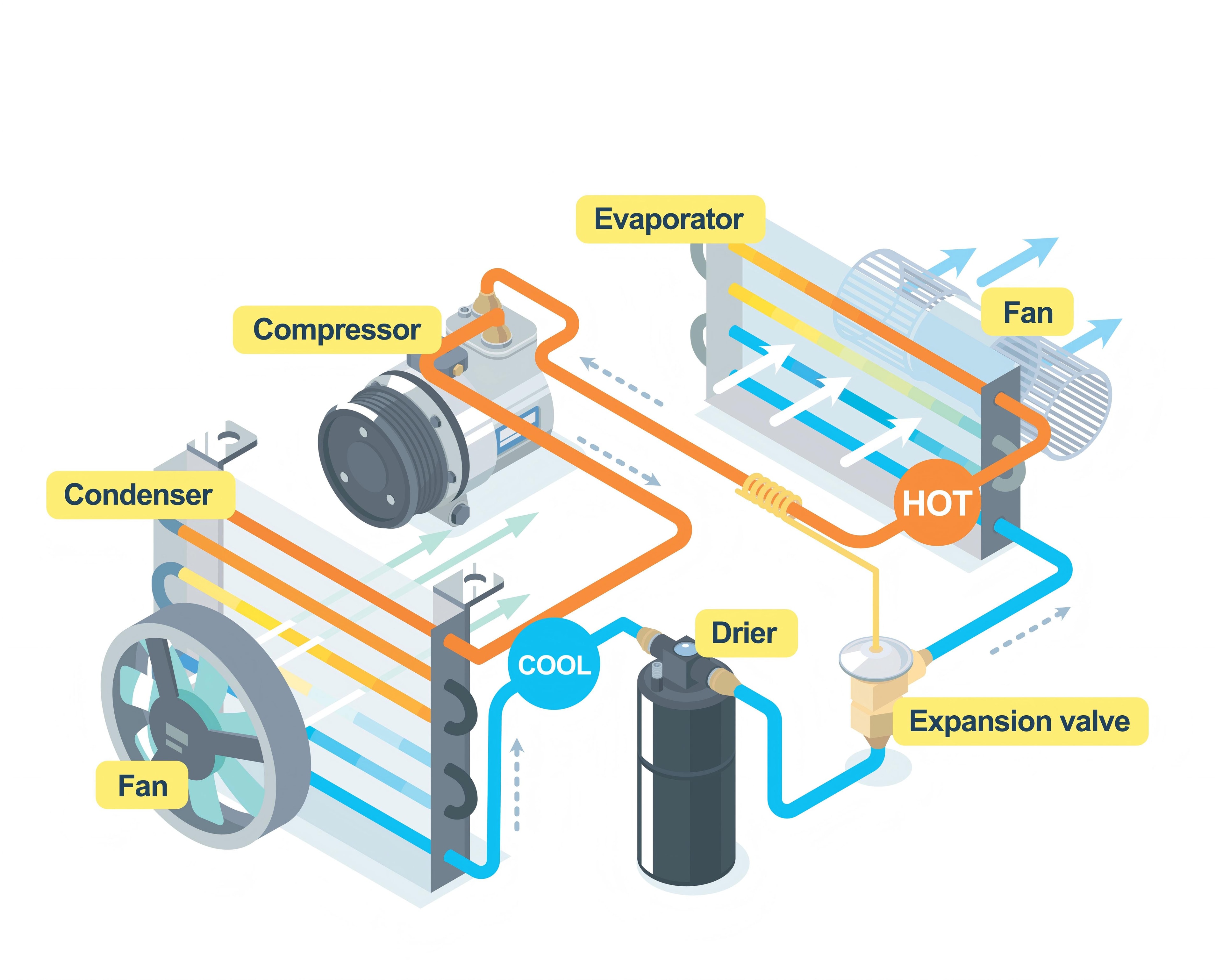
The heart of the A/C system — confirmed as the cause before replacement is recommended.
Condenser & Evaporator Service
Inspection and replacement for road debris damage, leaks, or restricted airflow.
Cabin Air Filter Replacement
One of the most overlooked services — a clogged filter makes a healthy A/C feel weak.
Heater Core Inspection & Repair
Diagnosis of cold heat, sweet smells, or fogged windows tied to the heater core or coolant system.
Blower Motor & Resistor Repair
Affects airflow strength and fan speed settings for both heating and cooling.
A/C & heating service in Hays County — Riley Auto Care & Transmissions, 1334 TX-123, San Marcos, TX.
Book Service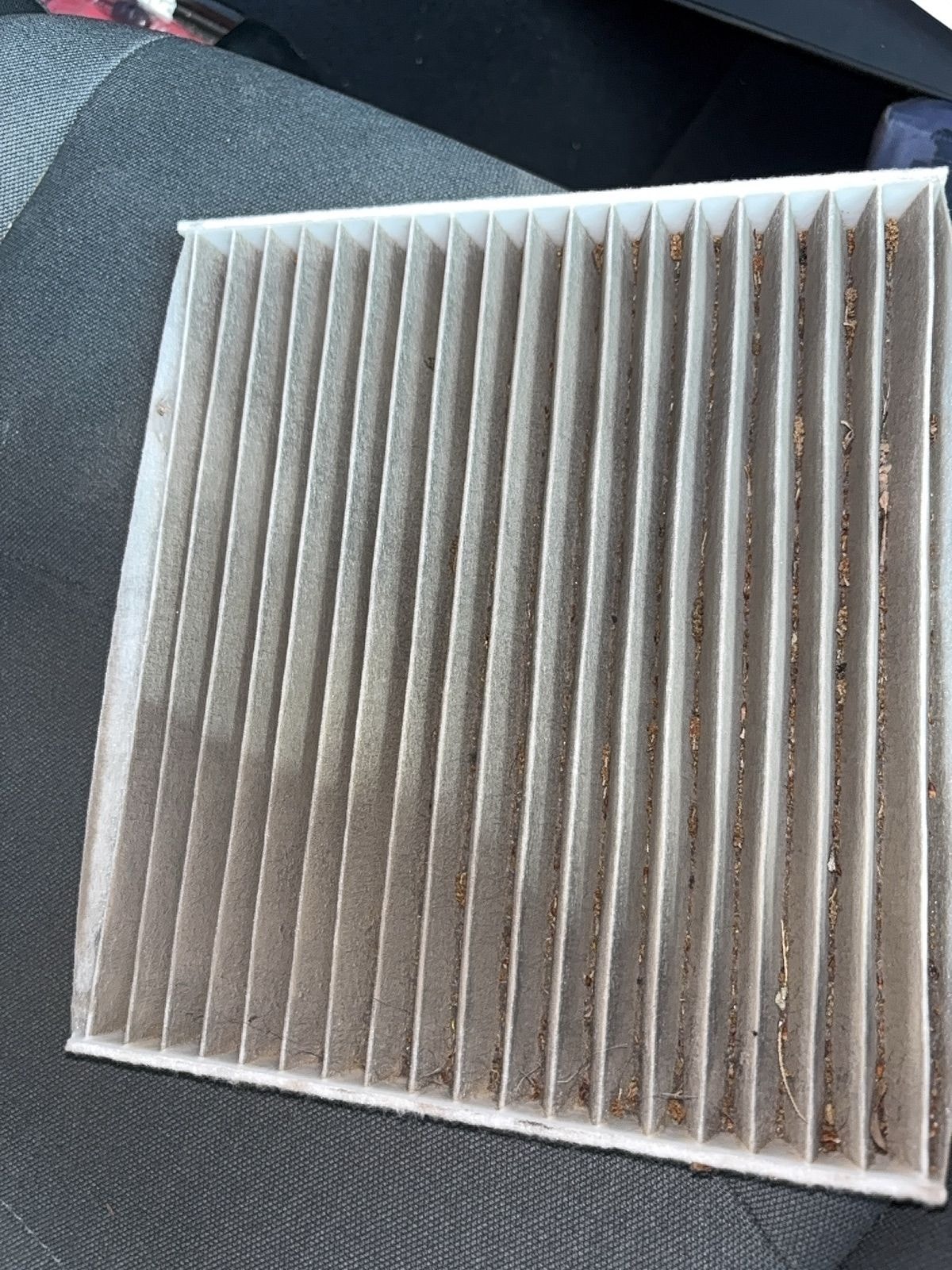
Often overlooked
The Cabin Air Filter: Small Part, Big Impact
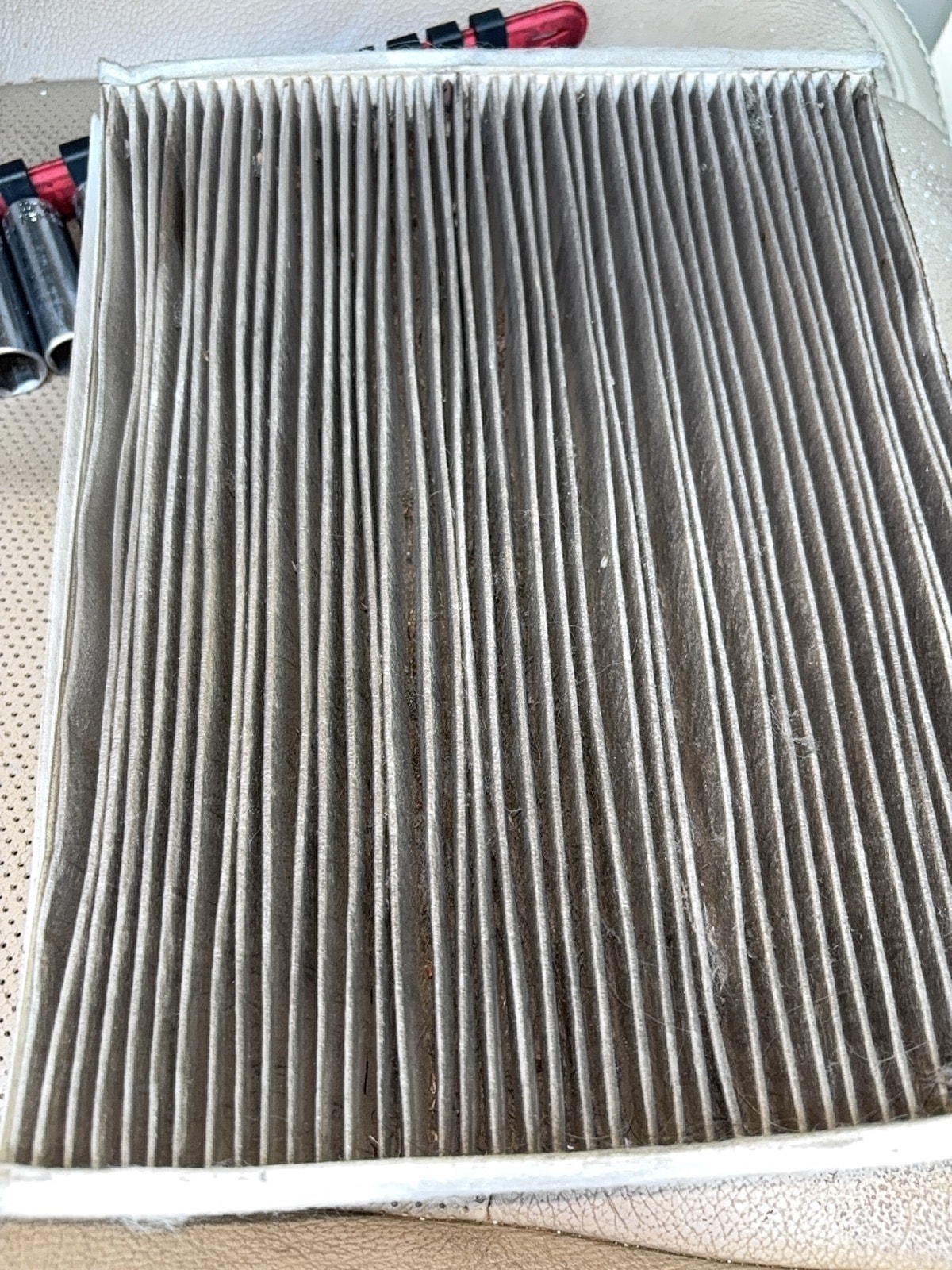
One of the most overlooked components in the entire system is the cabin air filter — and it causes more "my A/C isn't cooling like it used to" complaints than most people realize. This filter sits in the fresh-air intake for your HVAC system and catches dust, pollen, and debris before that air reaches your vents. According to AAA, a restricted cabin air filter causes reduced airflow through the HVAC system, foggy windows that are slow to clear, and persistent bad odors — and a filter that's clogged enough also places extra strain on the ventilation fan itself, which can shorten the fan's service life over time.
Carfax echoes this, noting that as filters age they can't pass as much air due to clogging and material degradation, which puts a heavier load on the vehicle's entire climate control system. In practical terms, a clogged cabin air filter can make a perfectly healthy A/C system feel weak — simply because it's struggling to push air through a blocked filter. It's one of the easiest and least expensive things to check, and it's often the very first thing worth ruling out before assuming a bigger, more expensive component has failed.
Carfax generally recommends replacing the cabin air filter roughly every 15,000 to 30,000 miles, or about once every one to two years — though drivers in dustier environments or with allergy sensitivities may want to replace it more often.
R-134a vs. R-1234yf: What You Need to Know
If your vehicle needs a refrigerant service, one of the first things we check is which refrigerant your system actually uses — because this isn't optional or interchangeable. Vehicles built before the early 2020s generally use R-134a, while nearly all new vehicles sold in the U.S. since then use R-1234yf, a newer refrigerant with a much lower environmental impact. The EPA required that as of model year 2021, new passenger vehicles could no longer be manufactured using R-134a.
These two refrigerants are not interchangeable, use different service fittings by design, and require completely separate recovery and recharge equipment. If you're not sure which refrigerant your vehicle uses, that's completely normal — it's something we check as a standard part of any A/C diagnostic.
- Service fittings are different by design — R-1234yf ports prevent accidental cross-connection with R-134a equipment
- Recovery and recharge equipment is separate — shops need dedicated machines for each refrigerant type
- R-1234yf typically costs more per pound due to more complex manufacturing and specialized equipment
- Diagnosing a leak or performance issue follows the same basic principles regardless of refrigerant type

Why Diagnostic Trouble Codes Matter for A/C Systems
Modern A/C systems aren't purely mechanical anymore — they're managed by one or more electronic control modules that constantly monitor pressure, temperature, and compressor behavior. When something goes wrong, the system often stores a diagnostic trouble code (DTC), even if no dashboard warning light comes on. A DTC tells us what the system detected, but it doesn't always tell us why — which is exactly why experienced diagnosis matters.
A few of the most common A/C-related diagnostic trouble codes:
- A/C Refrigerant Pressure Sensor Circuit codesThe control module isn't receiving a valid signal from the pressure sensor — often disables the compressor clutch as a protective measure.
- A/C Refrigerant Charge Loss codesSet when the system determines refrigerant has dropped below a safe operating level, usually pointing to a leak somewhere in the system.
- Compressor clutch circuit codesIndicate an electrical fault preventing the compressor clutch from engaging or disengaging properly.
- Blower motor circuit codesRelate to the fan responsible for pushing air through the vents, whether for A/C or heat.
- Climate control module communication codesThe HVAC control module isn't communicating properly with other systems — can affect both heating and cooling.
A code is a starting point, not a diagnosis. Skipping past that step and assuming a code always means one specific part is bad is one of the most common reasons a customer ends up paying for a part that didn't fix anything.
Serving San Marcos, Kyle, Buda, New Braunfels & Wimberley — Riley Auto Care & Transmissions on TX-123.
Book ServiceOur process
What a Thorough A/C & Heater Diagnostic Looks Like
When your vehicle comes in for A/C or heater concerns, here's generally what the process includes:
- A conversation about your symptoms — when it happens, how long it's been going on, and whether it's constant or intermittent
- A full diagnostic scan of relevant control modules for stored and pending codes
- Visual inspection of accessible components, hoses, and connections for obvious leaks, damage, or wear
- Pressure testing on both the high and low sides of the system to evaluate how it's actually performing under real conditions
- A check of the cabin air filter's condition
- Electrical testing of the compressor clutch, blower motor, and related circuits when needed
- UV dye or electronic leak detection when a leak is suspected but not visually obvious
- A clear explanation of findings before any repair work begins
Heater System Basics
While most people search for A/C help in the summer, the heater side of your HVAC system deserves attention too — especially heading into cooler months. Your heater relies on hot engine coolant being circulated through the heater core, a small radiator-like component tucked behind the dashboard. Air is then blown across that heated core and into the cabin.
Because this system shares coolant with your engine's cooling system, a heater that isn't working can sometimes point to a coolant-related issue — low coolant, a stuck thermostat, or a partially clogged heater core — rather than a problem exclusive to the HVAC system itself. A heater blowing cold air, or air that smells sweet (a sign of a coolant leak), should be looked at sooner rather than later, since it can sometimes be connected to your engine's cooling system health as a whole.
Why "Just Add Refrigerant" Rarely Solves the Problem
It's an understandable instinct: the A/C isn't cold, so the assumption is that it just needs more refrigerant. In a properly sealed system, though, refrigerant doesn't gradually disappear on its own — if the system is low, refrigerant has escaped somewhere, which means there's a leak, however small. Recharging a leaking system provides temporary relief at best, and in some cases can mask a problem that continues to worsen.
Repeated recharges without addressing the underlying leak also mean paying for refrigerant multiple times instead of once, plus continuing to release refrigerant into the atmosphere with each slow leak. A proper diagnostic approach identifies where the refrigerant is actually going before any recharge is performed, so the fix addresses the real problem rather than delaying it.
Serving San Marcos, Kyle, Buda, New Braunfels & Hays County
Easy to reach from I-35 and TX-123. Expert A/C & heating service for over 45 years.
Other auto repair services
A/C & Heating Repair Near Me — San Marcos, TX
Conveniently located in the heart of San Marcos, TX, Riley Auto Care & Transmissions is proud to be the trusted destination for expert auto repair in Central Texas.


Ready to Schedule?
Call us or book online — we'll take care of the rest.