
What Is a Thermal Bypass Valve — and Why Does It Fail?
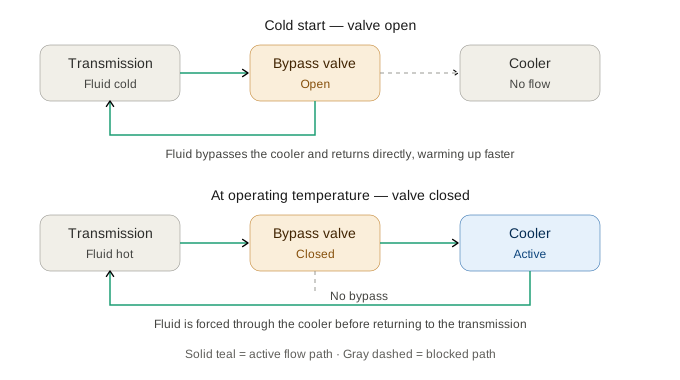
Many modern automatic transmissions use a thermal bypass valve (also called a thermal bypass solenoid or TBV) to route cold transmission fluid away from the cooler at startup, allowing the fluid to warm up faster. The idea is to improve fuel economy and shift quality during cold starts.
The problem is that these thermal bypass valves can stick in the bypass position — meaning fluid is never routed through the cooler, even when the transmission is fully warmed up. The result is chronically overheated transmission fluid, accelerated wear, and eventual internal failure. This is a documented issue in the 6L80, 8L90, 10L80, 68RFE, and several other transmissions.
The Solution — Thermal Bypass Valve Installation
The fix is to install a thermal bypass valve kit that eliminates the problematic valve and ensures fluid is always routed through the cooler once the transmission reaches operating temperature. This is a relatively straightforward procedure that can prevent thousands of dollars in transmission damage.
We recommend this service proactively for vehicles that are used for towing, performance driving, or any application where transmission temperatures run high — even if the thermal bypass valve hasn't failed yet.
Affected Transmissions
Thermal bypass valve issues are most commonly seen in:
- GM 6L80 / 6L90 — Silverado, Sierra, Tahoe, Suburban, Camaro, Corvette
- GM 8L45 / 8L90 — Camaro, Corvette, Silverado HD, Sierra HD
- GM 10L80 / 10L90 — Silverado, Sierra, Camaro
- Dodge 68RFE — Ram 2500/3500 Cummins diesel
- Other GM and Chrysler applications — ask our team if your vehicle is affected
Understanding Transmission Thermal Bypass Valve Failures — And Why a Bypass Upgrade Matters
Modern automatic transmissions rely on a small, often-overlooked component called a thermal bypass valve to manage fluid temperature. It's rarely something owners think about — until it fails and takes the transmission down with it. Below, we break down what this valve does, the documented ways it fails, what causes those failures, and why installing a bypass upgrade has become a standard part of a proper repair on many modern transmissions.
What Is a Thermal Bypass Valve, and Why Does It Exist? — A thermal bypass valve is a temperature-sensitive valve located either in the cooler line, inside the radiator's transmission cooler section, or internally within the transmission itself (often in the valve body). Its job is straightforward: when transmission fluid is cold, the valve stays open and routes fluid around the external cooler, allowing the fluid to warm up quickly. As the fluid reaches operating temperature, the valve gradually closes, forcing fluid through the cooler as needed to keep temperatures in check during normal driving. This system exists largely to help vehicles meet EPA CAFE fuel economy standards — getting the transmission up to full operating temperature quickly improves fuel economy and helps the increasingly temperature-sensitive low-viscosity fluids used in modern transmissions perform the way they're designed to. With the rise of 6, 7, 8, 9, and 10-speed transmissions, some form of thermal bypass system has become standard equipment across most modern platforms — GM, Ford, and Chrysler/Ram all use versions of this technology, though the specific valve design, location, and opening temperature vary significantly by manufacturer and transmission family.
Common Failure Modes — Thermal bypass valves are simple in concept but prone to real-world failure, and the way they fail matters enormously to the health of the transmission. Stuck closed (no cooler flow): with the valve stuck closed, fluid never gets routed through the external cooler at all, even under heavy load or hot weather — the transmission overheats quickly, often triggering a warning light or a noticeable loss of performance. Stuck open (constant bypass): if the valve fails in the open position, fluid continuously bypasses the cooler even once the transmission is fully warmed up, allowing heat to build gradually in the background — often for a long time before symptoms become obvious. Wax element failure: many of these valves use a wax-based thermal element that expands and contracts with temperature to physically move the valve; when that element fails, the valve loses its ability to respond correctly to fluid temperature, commonly leaving it stuck in one position. Debris contamination: metal particles and general debris circulating in transmission fluid can physically jam the valve mechanism, most commonly sticking it in the bypass position. Broken plastic components: on certain GM applications, technicians have specifically documented a plastic spring cup inside the thermal valve assembly that breaks or cracks over time — once that cup fails structurally, the valve can no longer regulate flow correctly.
Documented Cases Across Common Platforms — This isn't a theoretical concern — it's a well-documented, recurring issue across multiple transmission families. GM 6L80/6L90: technicians handling warranty and remanufacturing work identified a consistent pattern of thermal bypass valves failing in the closed position, causing rapid overheating complaints; inspection of failed units revealed the internal plastic spring cup cracking or breaking as the underlying cause. GM 8L90: the identical plastic spring cup failure pattern has been documented on 8L90 applications as well, causing the same type of overheating complaints. Chrysler 68RFE: these trucks use a cooler thermostatic bypass valve specifically to bring the transmission to operating temperature faster in cold weather; when this valve fails, the only effective repair is replacing the cooler — the valve isn't a standalone serviceable part, and its physical location on some Ram diesel trucks makes diagnosis and access genuinely difficult. Ford and GM 10-speeds: these platforms illustrate a different but related danger — the valve's opening temperature varies by manufacturer, and getting it wrong causes real damage; technicians who rebuild a Ford 10-speed but check fluid using GM-style assumptions have run into vehicles returning with slipping or unexpectedly dropping out of gear, traced back to the cooler sitting dry after the rebuild.
Why This Creates Problems Beyond Simple Overheating — A failed thermal bypass valve doesn't just risk overheating on its own — it actively interferes with proper transmission service and diagnosis. Compromised cooler flushing: if a bypass valve is stuck in the bypass position at room temperature — which is exactly the condition during a typical shop flush — cleaning solvent will simply bypass the cooler tubes entirely, leaving contamination and debris behind inside the cooler. False negatives during diagnosis: a valve stuck open won't show any obvious symptoms early on, allowing heat damage to accumulate quietly in the background over weeks or months before a customer notices performance issues. Repeat failures after repair: if the underlying bypass valve issue isn't identified and corrected during a rebuild, a freshly rebuilt transmission can overheat and fail again — even though the actual rebuild work was done correctly — simply because the cooling system feeding it was never fixed.
Why a Thermal Bypass Upgrade Is Often Necessary — Given how often this component fails, and how significant the consequences are when it does, replacing a factory thermal bypass valve with an aftermarket bypass solution has become a widely recommended step during many transmission repairs and rebuilds — not an optional add-on. It eliminates a known weak point permanently: rather than repeatedly repairing a failure-prone plastic thermal valve assembly, an aftermarket spool-valve-style bypass is installed that completely removes the failure point from the system going forward. It guarantees consistent cooler flow: ensuring full, unrestricted flow through the cooler under all driving conditions directly protects the transmission's internal clutches, seals, and fluid from accelerated heat-related wear. It prevents repeat comebacks: builders who include a bypass upgrade as standard practice on remanufactured units report it directly addresses a documented, recurring warranty complaint tied to plastic component failure inside the factory valve. It supports proper service procedures going forward: with a reliable, full-flow bypass in place, cooler flushing and fluid maintenance can be performed correctly and effectively for the life of the transmission. It's particularly valuable for towing and heavy-duty use: trucks used for towing or hauling place sustained extra heat load on the transmission precisely when reliable cooler flow matters most — exactly the condition where a stuck or failing factory bypass valve does the most damage.
The Bottom Line — The thermal bypass valve is a small part with an outsized impact on transmission longevity. Its failure modes are well documented across GM, Ford, and Chrysler platforms, its failures are difficult to catch early (especially when stuck open), and its consequences — overheating, ineffective cooler flushing, and repeat transmission failures — are serious and costly. For these reasons, addressing this component with a permanent bypass solution during a transmission repair isn't an upsell; it's a proactive fix for a documented, industry-recognized weak point, and one of the most effective ways to protect the long-term health of a rebuilt or repaired transmission. If you have questions about whether your vehicle's transmission would benefit from a thermal bypass upgrade, we're happy to walk through the details with you.
Thermal Bypass Valve Installation — San Marcos, TX
Don't wait for your thermal bypass valve to fail and take your transmission with it. Call or book online — this is a straightforward, cost-effective service that can save you from a much more expensive repair down the road.
Location
Transmission Thermal Bypass Valve Installation Near Me — San Marcos, TX
Conveniently located at 1334 TX-123, San Marcos, TX 78666 — easy access from I-35, serving Kyle, Buda, New Braunfels, Wimberley, and all of Central Texas.